
Quick Answer
A blocked kitchen sink is usually fat, oil and food scraps caught in the trap under the sink or built up in the pipe beyond it. Try a sink plunger first, then clean out the trap. Skip boiling water and caustic drain cleaners. If the trap is clear and the sink is still slow, the blockage is further down and needs a plumber.
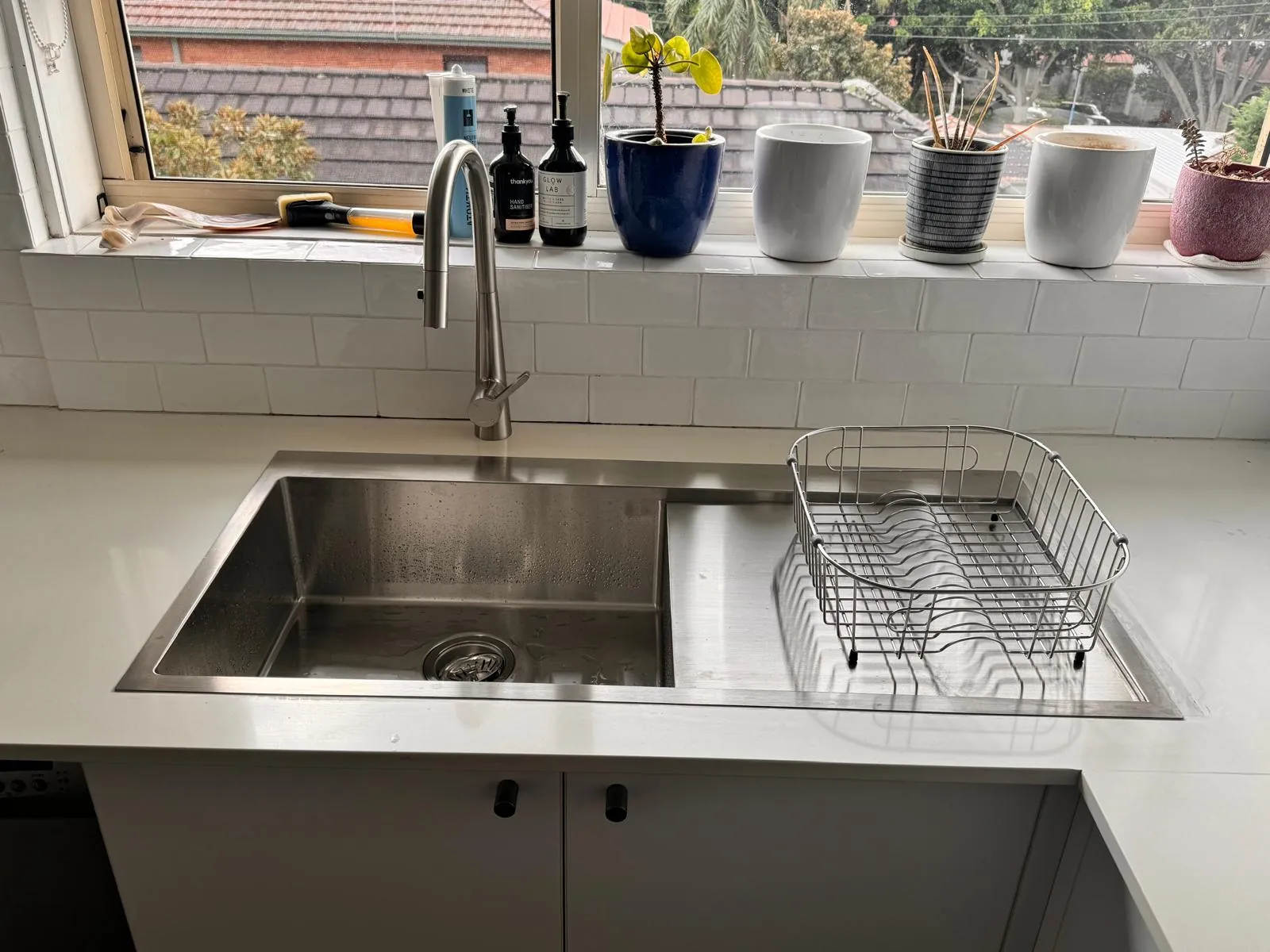
The kitchen sink is the hardest-working drain in the house, and the one that gets the worst of what we put down it. When it backs up, it usually happens at the worst time: halfway through the dishes after a big dinner.
Most kitchen sink blockages are close by and can be cleared without a plumber. A few are further down the line, and those are worth recognising early.
Why kitchen sinks block
Fat, oil and grease. Poured down warm, they cool in the pipe and set on its walls. Every meal adds a layer, and the pipe slowly narrows.
Food scraps. Rice, pasta, coffee grounds, eggshells and peelings catch on the fat and bind it together.
The dishwasher. It usually drains into the same pipe under the sink, so a sink that backs up when the dishwasher empties is sharing its blockage.
A problem further down. Grease builds up most where the pipe runs outside and cools, and in older homes roots or a sagging pipe can add to it.
What to try first
1. Empty what you can. Scoop or bail standing water into a bucket so you can see what you are doing.
2. Use a sink plunger. A small cup plunger, not the toilet one. If you have a double sink, block the other plug hole with a wet cloth or its plug, and cover the overflow hole with a cloth too, so the push goes into the blockage rather than out the other side. Leave a little water in the bowl, seal the plunger over the plug hole and plunge firmly a dozen times.
3. Flush with hot tap water and a squeeze of dishwashing liquid once it starts to drain. That carries the loosened fat further than cold water.
Clearing the trap
The trap is the U-shaped bend of plastic pipe under the sink. It holds a little water to stop sewer smells coming up, and it is where a lot of blockages sit.
Put a bucket underneath, then undo the large plastic slip nuts by hand and lower the trap out. Clean it out, check the short pipes either side, and refit it hand-tight, making sure the washers are seated. Run the tap and check for drips. Our guide to water under the kitchen sink covers what to look for if a joint weeps afterwards.
If the trap was clean and the sink is still slow, the blockage is further down the line.
What not to do
Don’t pour boiling water down. Most modern sinks drain through plastic pipe, and boiling water can soften and loosen the joints. It only melts the fat for a moment anyway: it sets again a few metres further on.
Don’t use caustic drain cleaners. They get very hot, rarely shift a real blockage, can damage pipes and seals, and leave a pipe full of chemical for whoever opens it next. Never mix two products.
Don’t force wire or a coat hanger through the plug hole. It can damage the waste fitting and pack the blockage tighter.
When it’s further down
Call a plumber when the trap is clear and the sink is still slow, when both bowls and the dishwasher back up together, when the sink keeps blocking every few weeks, or when water comes up somewhere else, such as a floor waste or the grate in the yard.
A plunger only opens a small hole through a fat build-up. High-pressure jet blasting cleans the pipe back to its full size, and a camera shows whether anything else is going on. Our guide to why drains block covers the other common causes.
Christmas cooking
The week between Christmas and New Year is when kitchen sinks block most. Roasts, ham glaze, frying and a sink full of dishes from a crowd all put more fat down the drain in a few days than it sees in a month.
A few habits keep it clear: pour cooled fat and oil into a container for the bin, wipe greasy pans and plates with paper towel before washing them, use a strainer in the plug hole, and run hot tap water for a minute after the last load of dishes.
FAQs
What is the best way to unblock a kitchen sink?
Start with a sink plunger: block the other bowl’s plug hole with a wet cloth, cover the overflow, and plunge firmly a dozen times. If that doesn’t clear it, put a bucket under the trap and clean it out. If the trap is clear and the sink is still slow, the blockage is further down the pipe and needs a plumber.
Should I pour boiling water down a blocked sink?
No. Boiling water can soften and loosen the plastic pipe joints under most modern sinks, and it only melts fat for a moment before it sets again further down the line. Hot tap water with a little dishwashing liquid is safer for a slow sink.
Why does my kitchen sink keep blocking?
Usually fat and food building up on the walls of the pipe beyond the sink, so each clearing only opens a small hole. Jet blasting cleans the pipe back to its full size. A sink that blocks along with other drains points to a problem in the main line.
Sink Still Blocked?
Mr. Clog clears blocked kitchen sinks and drains across Sydney, including over Christmas, with no call-out fee and a fixed price before any work starts.