
Quick Answer
Water under a kitchen sink comes from the supply side (isolation valves, flexi hoses, tap connections), the waste side (the trap, its slip nuts and the sink waste seal), or an appliance (dishwasher hoses, a filter or boiling water unit). If it is wet when nothing is running, it is the supply side and is under pressure, so turn off the isolation valves first.
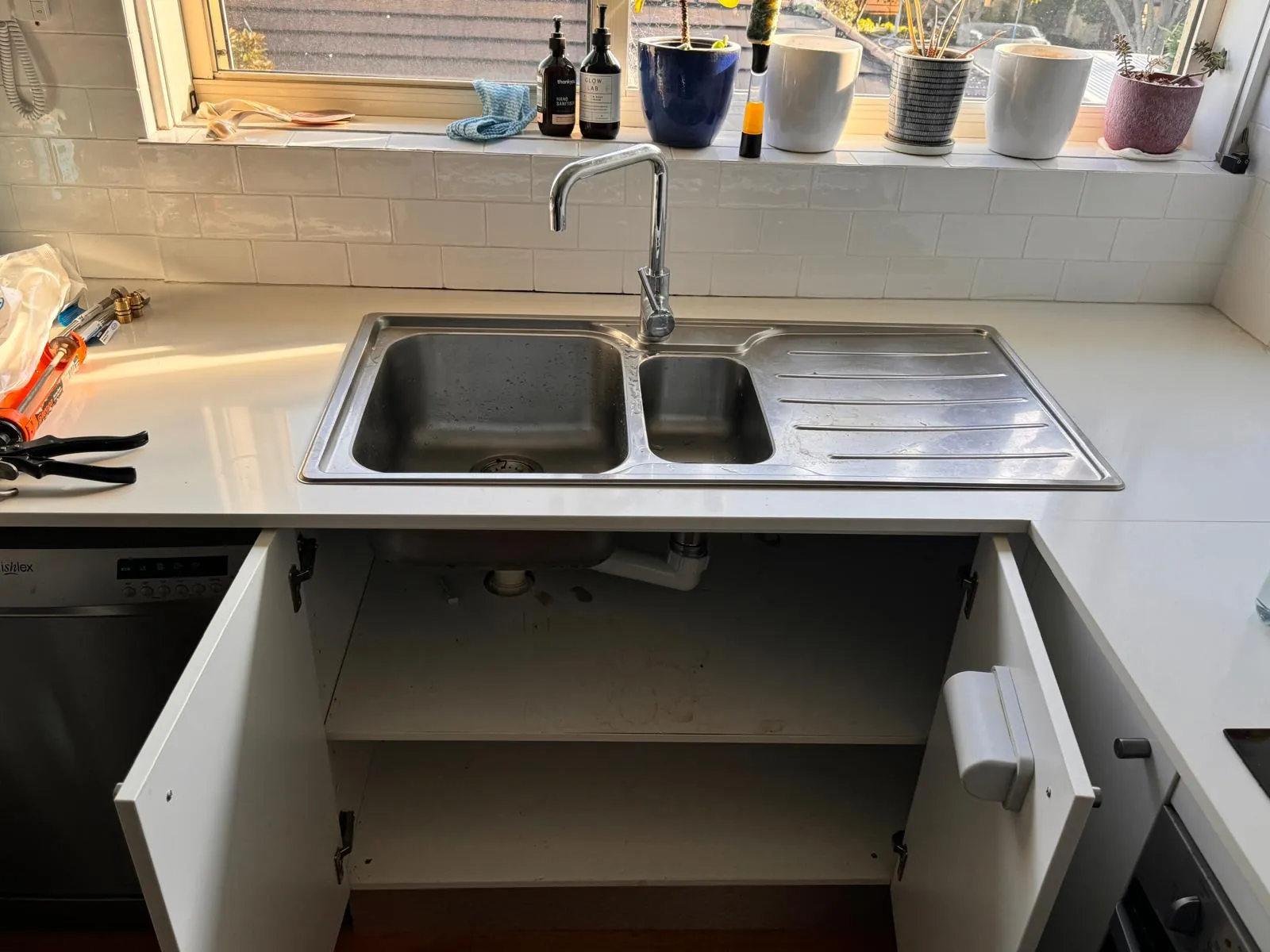
You reach for the bin and find the cupboard floor wet, or the bottom panel has started to swell and bubble. Water under the kitchen sink is one of the most common leaks in a house, and it usually has a short list of causes.
The cupboard is crowded: two water supplies, a tap, a waste pipe and trap, and often a dishwasher and a filter as well. The trick is working out which one is wet, and that takes about five minutes.
Do this first
If water is spraying, turn it off. The two small taps on the wall under the sink are the isolation valves for the hot and cold supply. Turn both off. If they won’t turn, or there are none, turn off the main stop tap beside the water meter.
If it is a drip, empty the cupboard, put a towel and a container down, and keep reading.
Find it in five minutes
Dry everything under the sink with a towel, then lay dry paper towel on the cupboard floor and under each fitting. Then test one thing at a time:
1. Do nothing for ten minutes. If the paper gets wet with no taps running, the leak is on the supply side.
2. Run the tap for a minute, into the sink with the plug out. Wet paper now, but not before, points to the tap or the waste.
3. Fill the sink and let it drain all at once. A full sink puts the most water through the waste. Drips that only show now are from the waste side.
4. Run the dishwasher if you have one, and watch its hoses while it fills and drains.
Always wet: the supply side
The supply side is under mains pressure day and night, which is why it leaks even when nothing is running.
Flexi hoses. The braided hoses from the isolation valves to the tap are the most common culprit. Look for rust on the braid, fraying, bulges, or moisture where the hose meets its fittings. A hose showing any of those should be replaced before it bursts. Our guide to spotting a failing flexi hose shows what to look for.
Isolation valves. The small wall taps can weep around the spindle or at their joints, especially if they haven’t been turned in years.
The tap itself. A mixer that leaks at its base can let water run down through the bench hole into the cupboard. You’ll usually see water around the base of the tap on the bench too. Our guide to a leaking tap covers what that repair involves.
Wet when draining: the waste
The waste side only leaks when water is going down the sink.
The trap and its slip nuts. The plastic U-bend under the sink joins up with large screw-on nuts. They can work loose, or their washers can perish. A loose one can often be hand-tightened, but don’t force it.
The sink waste seal. Where the plug hole fitting meets the sink, a seal or putty keeps water in. When it fails, water runs down the outside of the waste pipe every time the sink drains.
A partly blocked waste. A slow-draining sink can back water up and push it out of a weak joint. Fixing the leak without clearing the blockage just moves the problem.
The bench seal. If water is getting in from above, around the rim of the sink, the silicone between the sink and the benchtop may have failed.
Dishwashers and filters
A dishwasher connects under the sink twice: a supply hose to a valve, and a drain hose to the sink waste. Either can split, loosen or perish, and leaks often only show while the machine is running.
Water filters, filtered water taps, and boiling or chilled water units add more connections in the same cupboard. If one was fitted recently, check its fittings first. Our guide to water filters covers the common types.
Check the cupboard itself
Most kitchen cupboards are made from particleboard, which soaks up water and swells. A cupboard floor that has bubbled or gone soft has usually been getting wet for a while. Once the leak is fixed, let it dry out with the door open. If it stays swollen, the panel may need replacing.
If the floor under the kitchen is also damp, or water is showing in a room below, the leak may be in a pipe inside the wall or floor rather than in the cupboard. That needs finding properly, and our leaking pipe repairs service starts there.
FAQs
Why is there water under my kitchen sink when I haven’t used it?
Water that appears when nothing is running comes from the supply side: the isolation valves, the flexi hoses to the tap, or the tap’s own connections. These are under pressure all the time. Turn off the isolation valves and call a plumber, and check the braided hoses for rust or fraying.
Is water under the sink an emergency?
A slow drip is not an emergency, but don’t leave it. A hose that is spraying is: turn off the isolation valves under the sink or the main stop tap at the meter straight away, then call a plumber.
Can I just tighten the fittings under the sink myself?
A loose slip nut on the plastic waste trap can often be hand-tightened. Leave the supply connections, valves and hoses to a licensed plumber: over-tightening them can crack a fitting, and replacing them is licensed work in NSW.
Still Wet Under the Sink?
Mr. Clog finds and fixes leaks under kitchen sinks across Sydney, with no call-out fee and a fixed price before any work starts.