Mr. Clog Plumbing

Stormwater Plumber Sydney: Blocked, Cracked & Broken Drains

Yard flooding or water against the house? Licensed local plumbers find the fault on a drain camera, then clear, reline or replace the line. Phones answered 24/7.

No surprise bills: $0 call-out and a fixed price before any work starts.

Our guarantee: 12 months on our workmanship, in writing. What it covers

Poor stormwater drainage can cause flooding, structural damage, and costly repairs. Mr. Clog designs, installs, and repairs stormwater drainage systems for homes and businesses across Sydney. From clearing blocked pits to full drainage redesigns, we keep water moving away from your property.

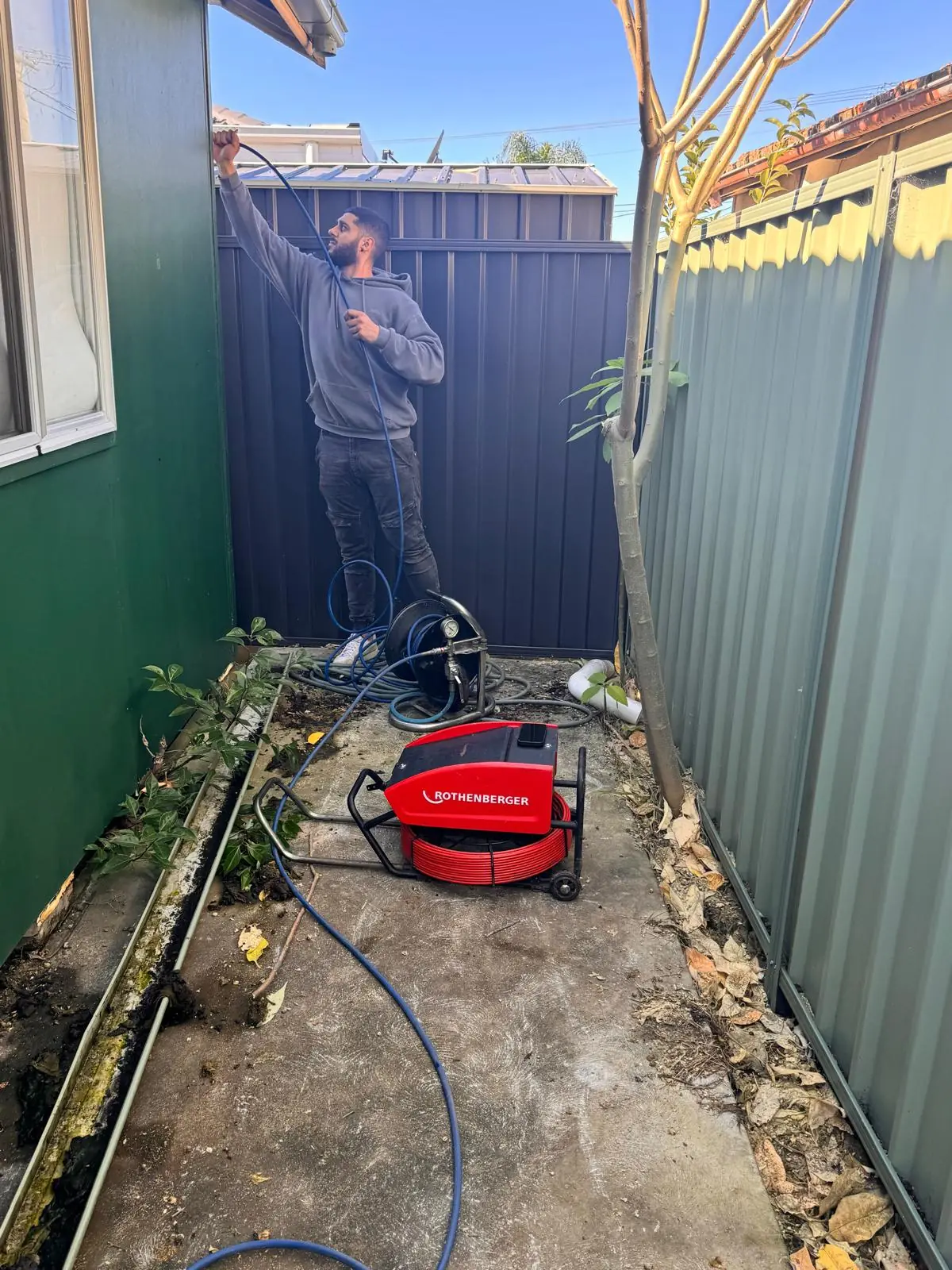
Mr. Clog plumber feeding a hose up a narrow side passage beside a house, with a drain machine and an open trench along the wall
Working a line down the side passage of a Sydney home. Access this tight is the normal case, not the exception.
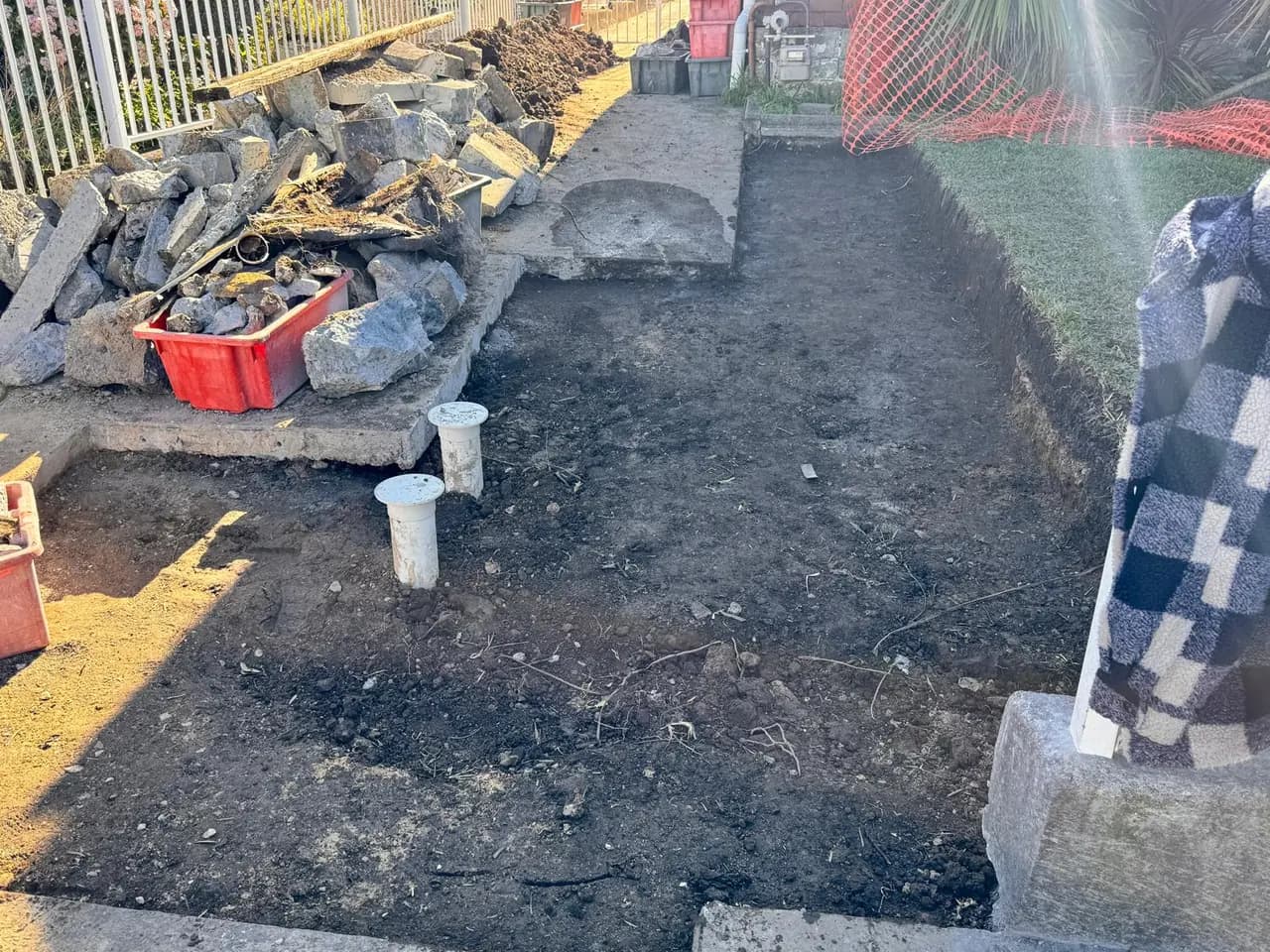
Open drainage excavation across a Sydney yard with new inspection risers standing proud, broken concrete stacked to one side and orange safety mesh around the dig
A larger dig with new inspection openings in. Concrete is lifted and stacked rather than broken into the soil, and the excavation is fenced while it is open.
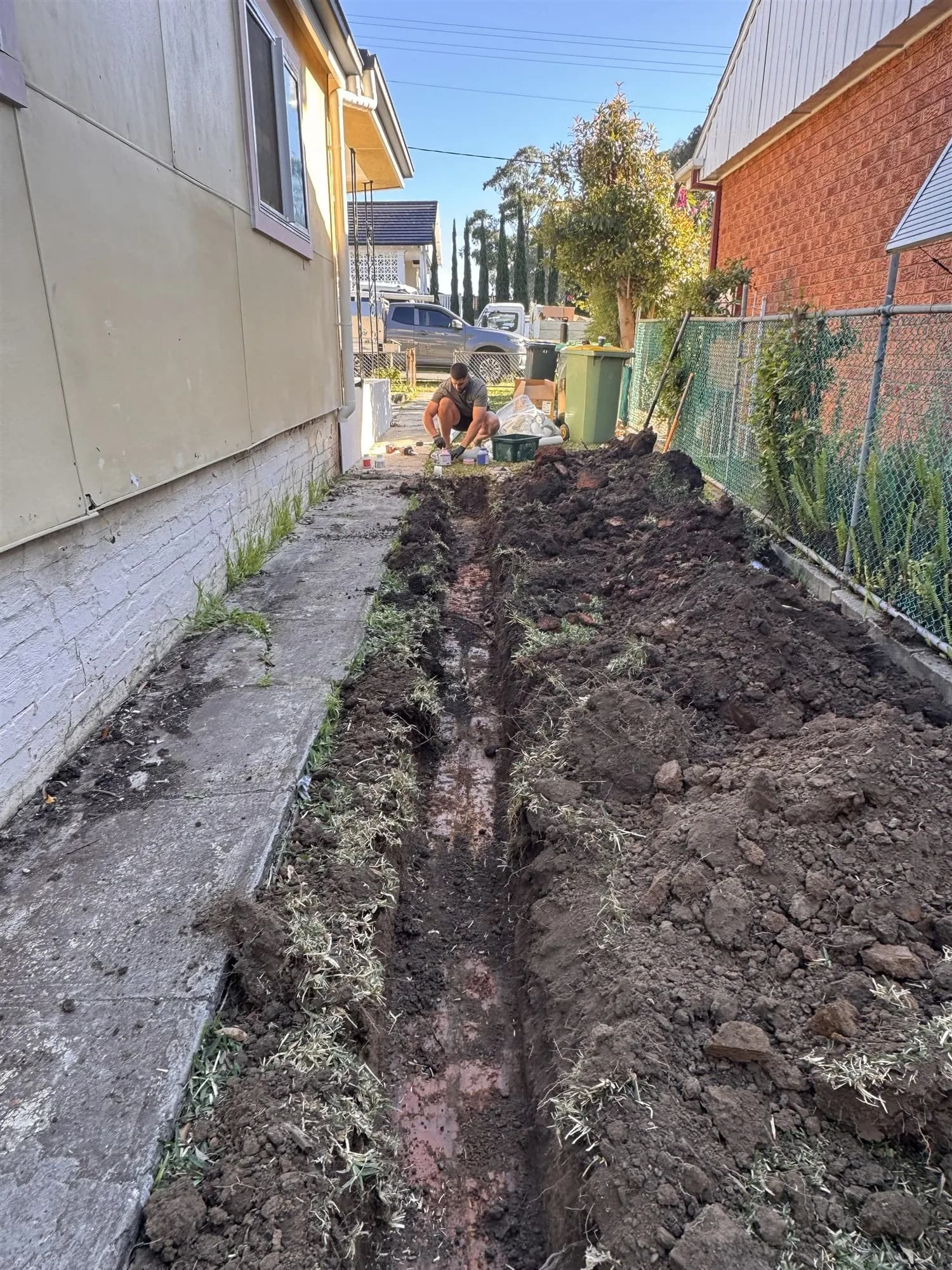
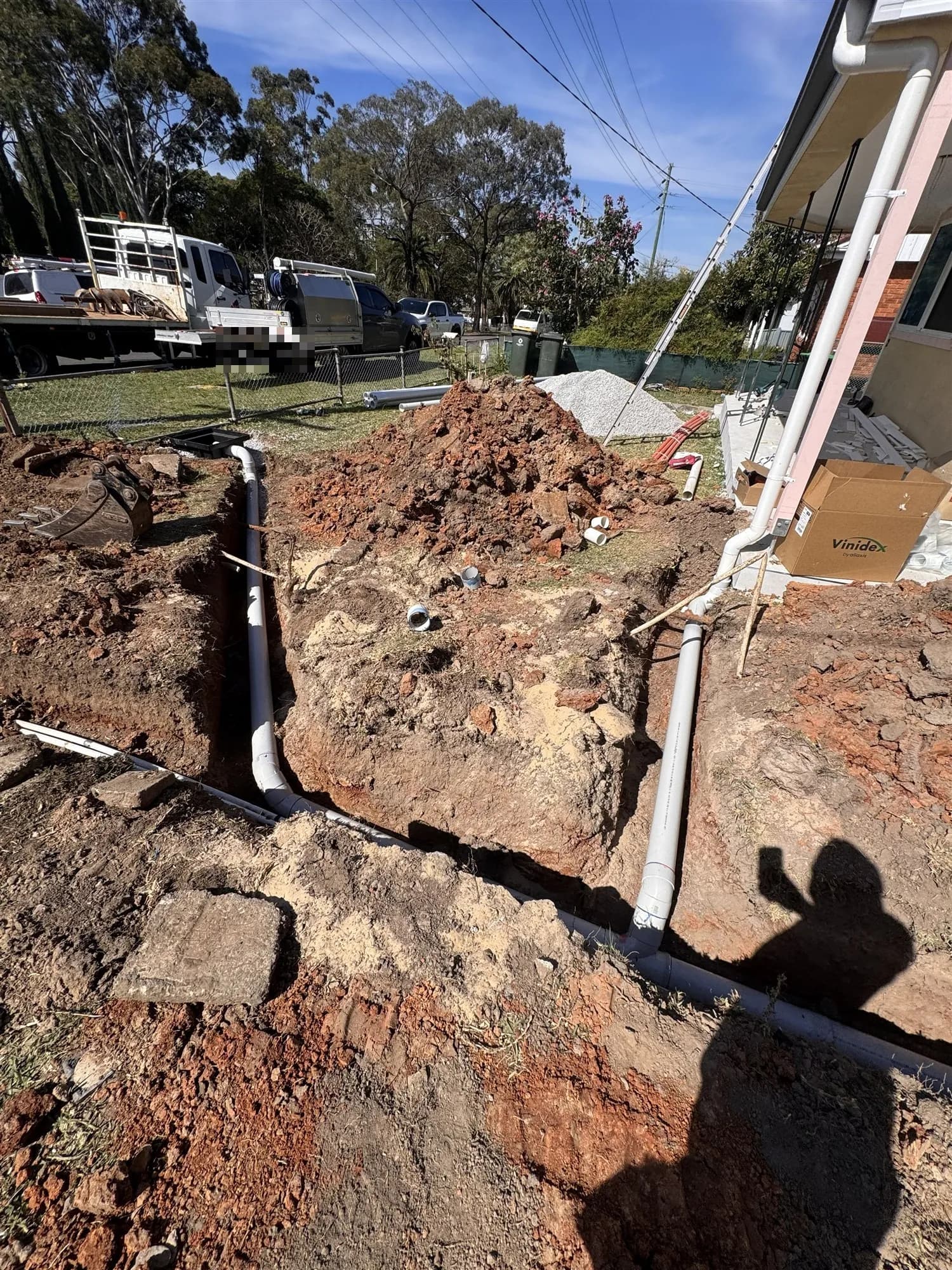
Trench dug along the side of a house in Merrylands to replace a cracked stormwater line
Merrylands: the old stormwater line around the perimeter of the house was cracked and broken, so we dug the trenches by machine to replace it.
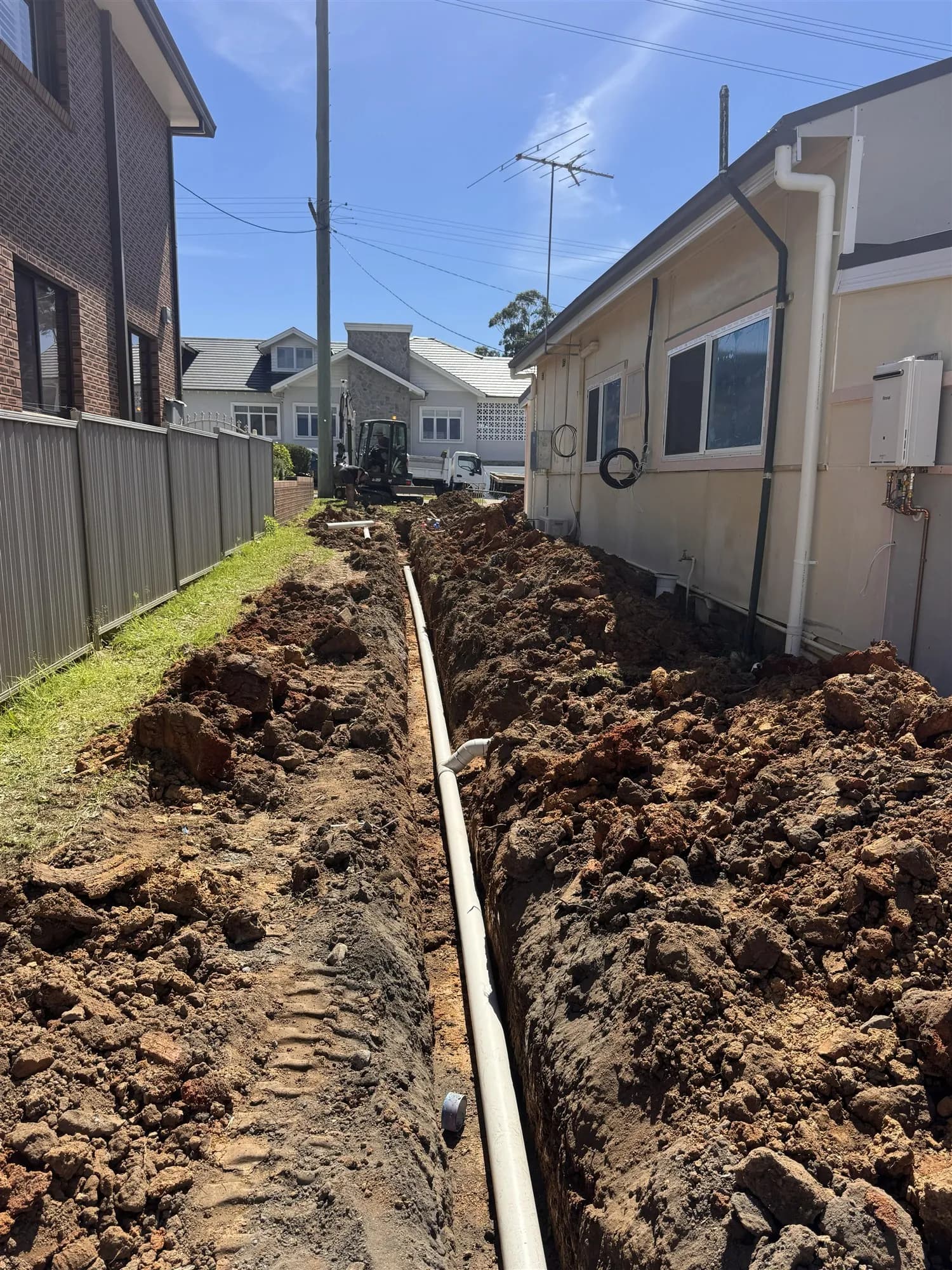
New 100 mm PVC stormwater line laid in a trench beside a house in Merrylands
The new line going in: 50 m of new 100 mm stormwater pipe laid around the house.
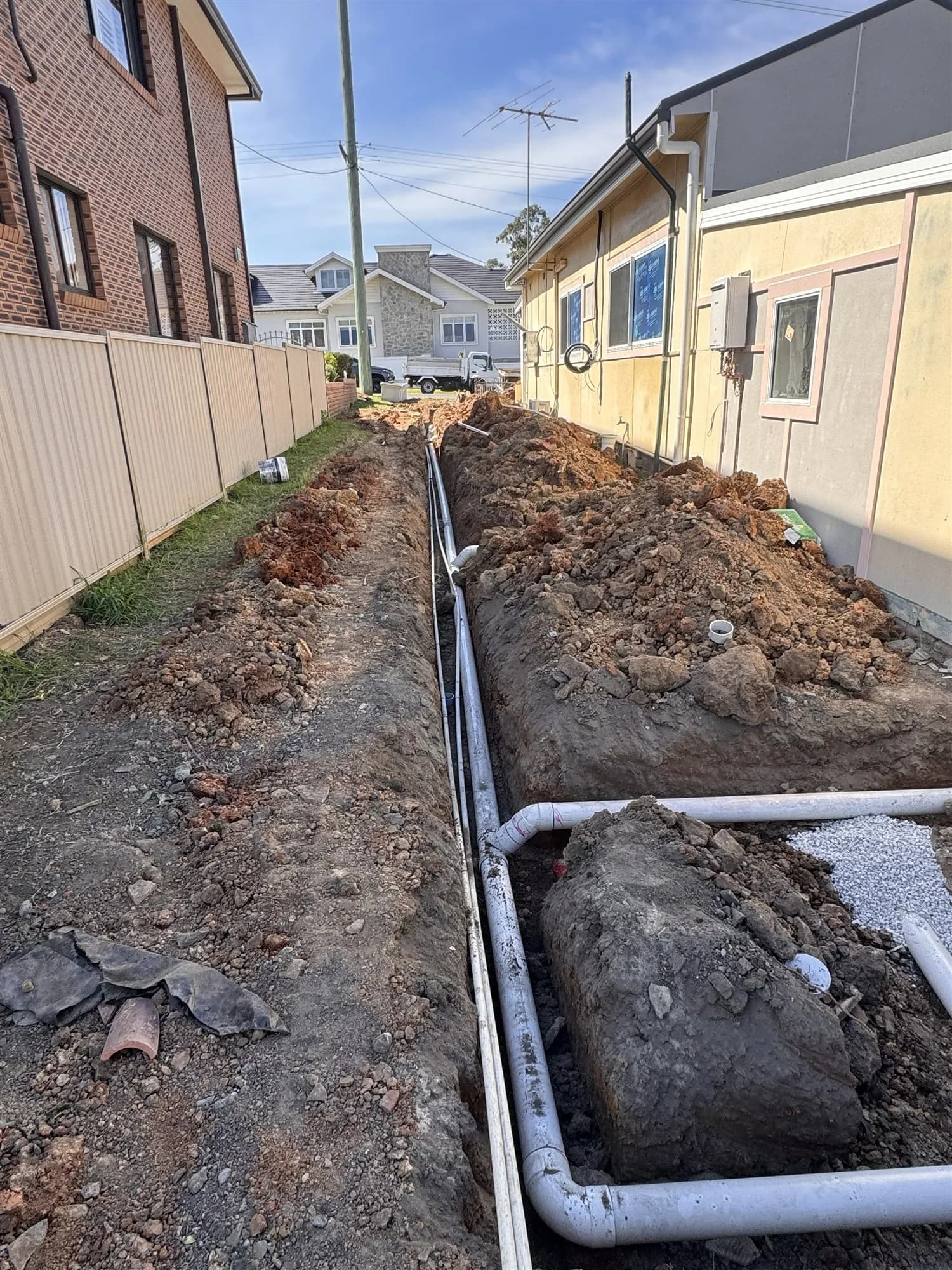
Downpipe connections joined into the new stormwater line in the trench in Merrylands
The downpipes connected into the new stormwater line, so roof water runs straight into it.
New stormwater pit and pipe running out towards the street at the front of a house in Merrylands
A new pit and a new line out to the street finished the job.
  • Stormwater pit and pipe clearing
  • New drainage system design and installation
  • CCTV inspection of stormwater lines
  • Overflow relief gully installation
  • Compliance with Sydney Water and council requirements

Fixed price quoted before we start. $0 call-out fee.

Stormwater problems show up in the yard long before anyone sees the pipe. These are the signs worth acting on.

Water that sits for hours or days after the rain stops, in the same spots every time, usually means a pit or line is blocked, or the pipe under it has broken and can't carry the water away.

A strip of lawn that stays wet, sinks or grows greener than the rest, even in dry weather, often traces a cracked or broken pipe leaking into the soil.

Water running towards the walls, ponding at the base of the house or turning up in the subfloor after heavy rain is the most serious sign, because that is how water gets under slabs and footings.

Pits and grates that fill and spill instead of draining, gutters overflowing at the downpipe, or water bubbling out where a downpipe meets the ground all mean the line below is not taking the water.

Most stormwater lines are underground and out of sight, so the first job is to see inside them rather than guess.

A CCTV drain camera goes in from a pit, downpipe connection or inspection opening and shows what is in the pipe and what state it is in: leaves and silt, tree roots, cracks, open joints, a length that has broken or collapsed, or a section that has sagged.

The footage records how far along the line each fault is. We locate it on the surface, so you know whether it sits under lawn, paving, a driveway or the house.

You see the footage on the screen with us, and we explain what it means and the options, with a price before any work starts.

The camera footage decides which of these a stormwater line needs. Sometimes it is more than one.

When the pipe itself is sound and the problem is leaves, silt, soil or roots inside it, a high-pressure jet blaster flushes the line clean. We check the pits and grates too, because a pit full of silt will block the line again.

When the pipe is cracked or root-damaged but still holds its shape, and especially where it runs under a driveway, paving or an established garden, relining seals it from the inside and leaves the ground alone.

When the line is broken or collapsed along much of its length, has sagged so water sits in it, or was laid without enough fall, relining would only copy the problem. Digging it out and laying a new line fixes it properly, and is often straightforward where the pipe runs under lawn or a garden bed.

Every property is different, but a replacement generally follows the same steps.

The route is set out and trenches are dug along it, by machine where there is room and by hand where access is tight. Concrete and paving that have to come up are lifted and set aside.

New stormwater pipe is laid in the trench with enough fall for the water to run away on its own, from the back of the property towards the discharge point.

Each downpipe is connected into the new line, and pits are installed where surface water needs to be collected, so both roof water and yard water have somewhere to go.

The line is run to where the property's stormwater is allowed to discharge. For many homes that is the street kerb; for others it is a council drain or another approved point.

Water is run through the new line to confirm it flows before the trenches are backfilled.

From the Job Sheet

Guildford Β·

The problem

This is the same Guildford granny flat where we did the sewer drainage as stage one. Next came the stormwater: it needed somewhere to go, including the water from the driveway grates.

What we did

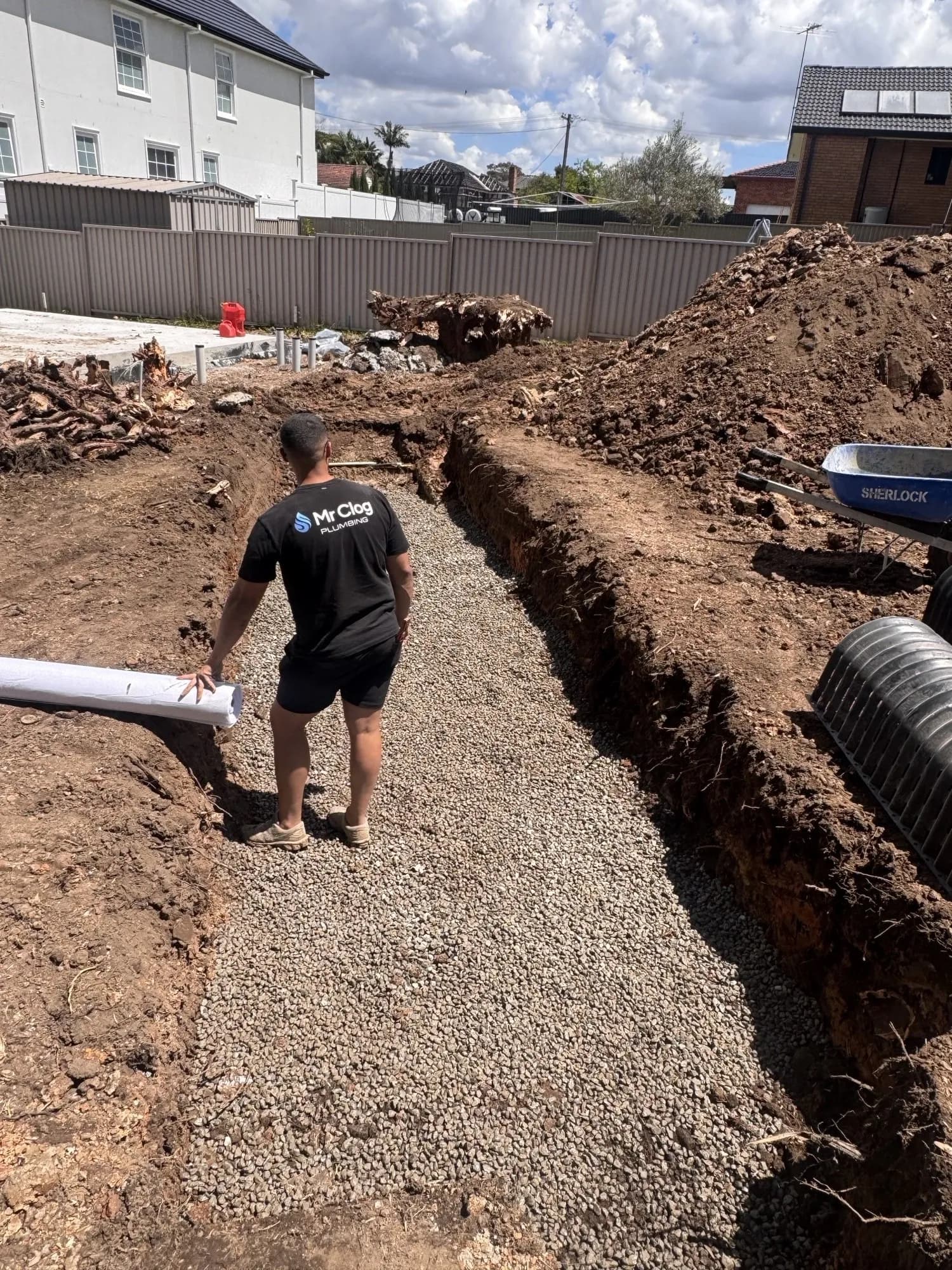
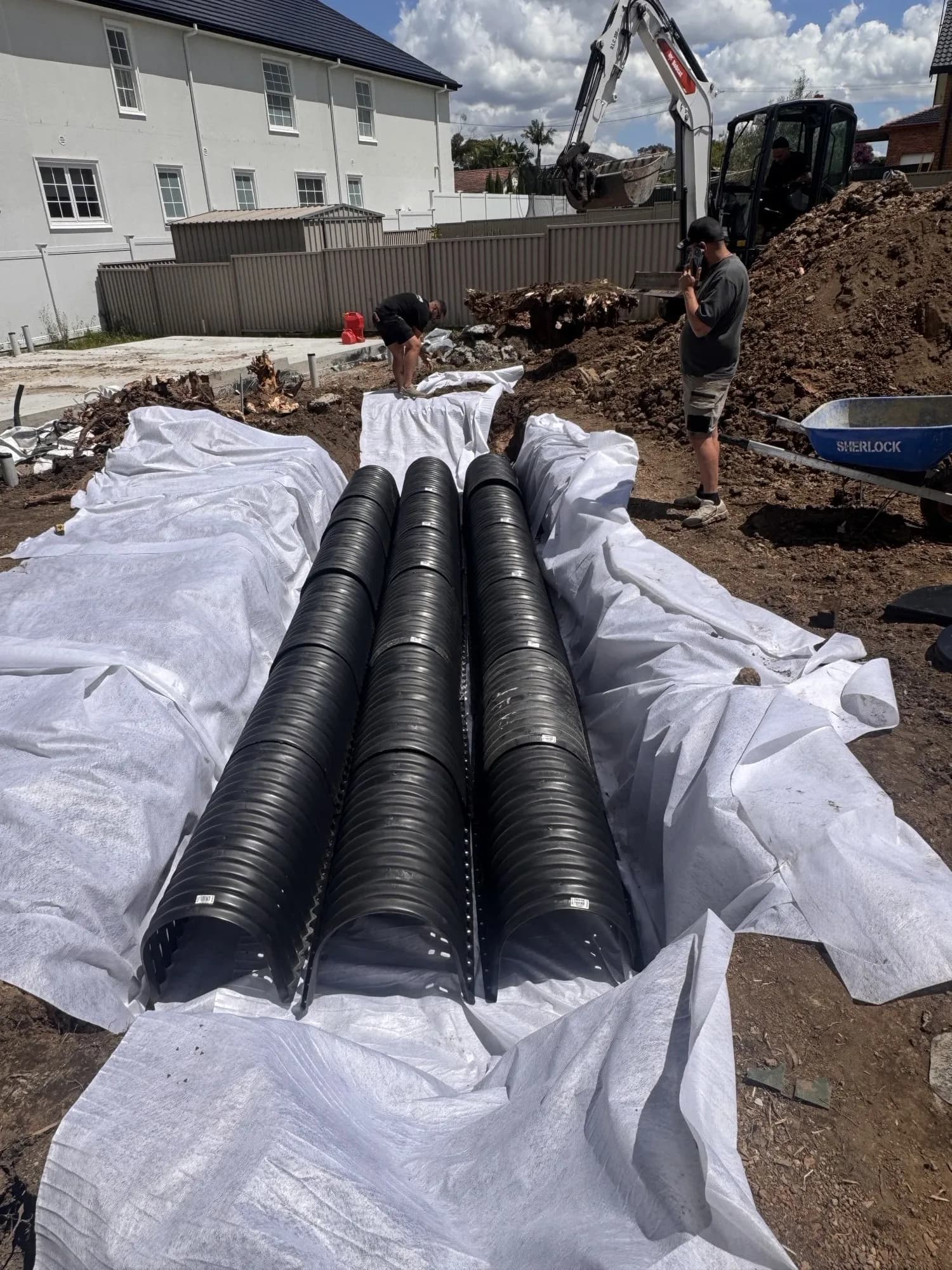
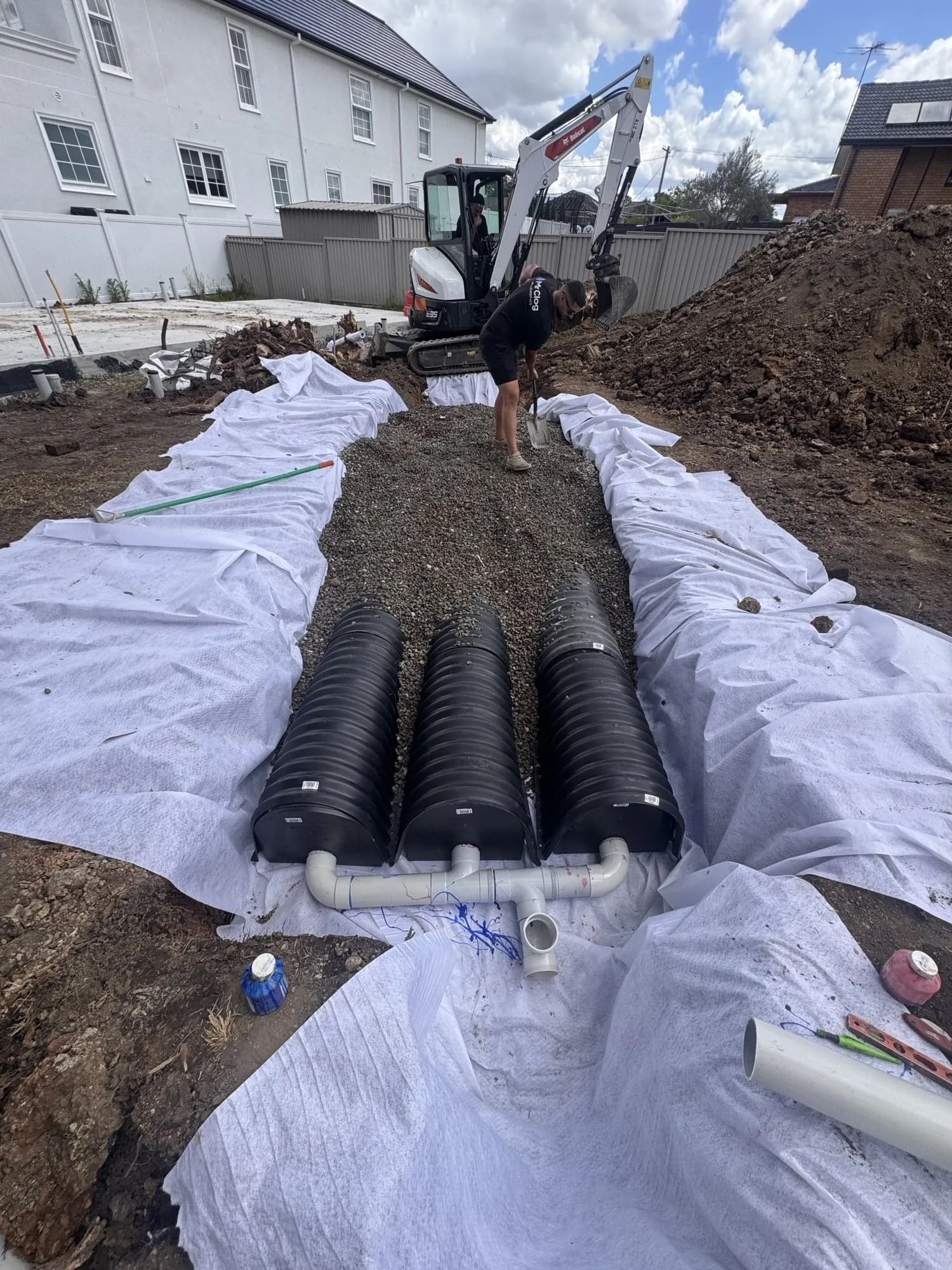
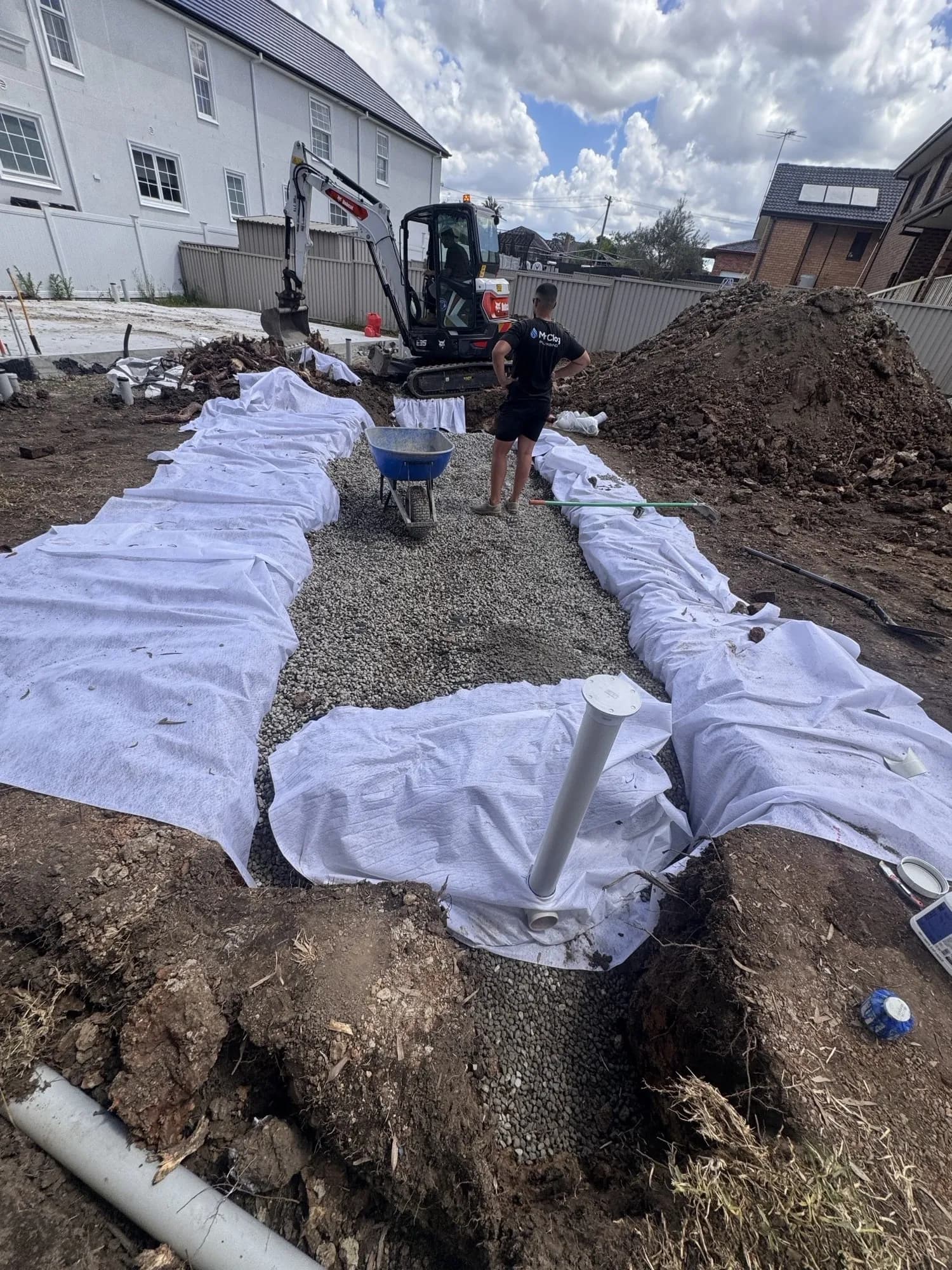
We dug and built an absorption trench 7 m long, 2 m wide and 1 m deep. We lined it with geotextile fabric, laid the stormwater cells on a bed of 20 mm blue metal, backfilled with 20 mm blue metal and wrapped the fabric over the top. We installed two 650 x 650 pits, and the driveway grates drain into the trench.

Earlier stage of this job: Sewer drainage for a new granny flat

Next stage of this job: Granny flat, next stage: hot and cold water rough-in

Trench dug in the backyard for the stormwater absorption trench, with the stormwater cells waiting beside it
20 mm blue metal bed spread along the bottom of the absorption trench, with a roll of geotextile fabric ready
Three rows of black stormwater cells laid on geotextile fabric in the absorption trench
PVC inlet pipework connected to the ends of the three rows of stormwater cells
Absorption trench backfilled with blue metal, with the geotextile fabric being wrapped over the top

Haberfield Β·

The problem

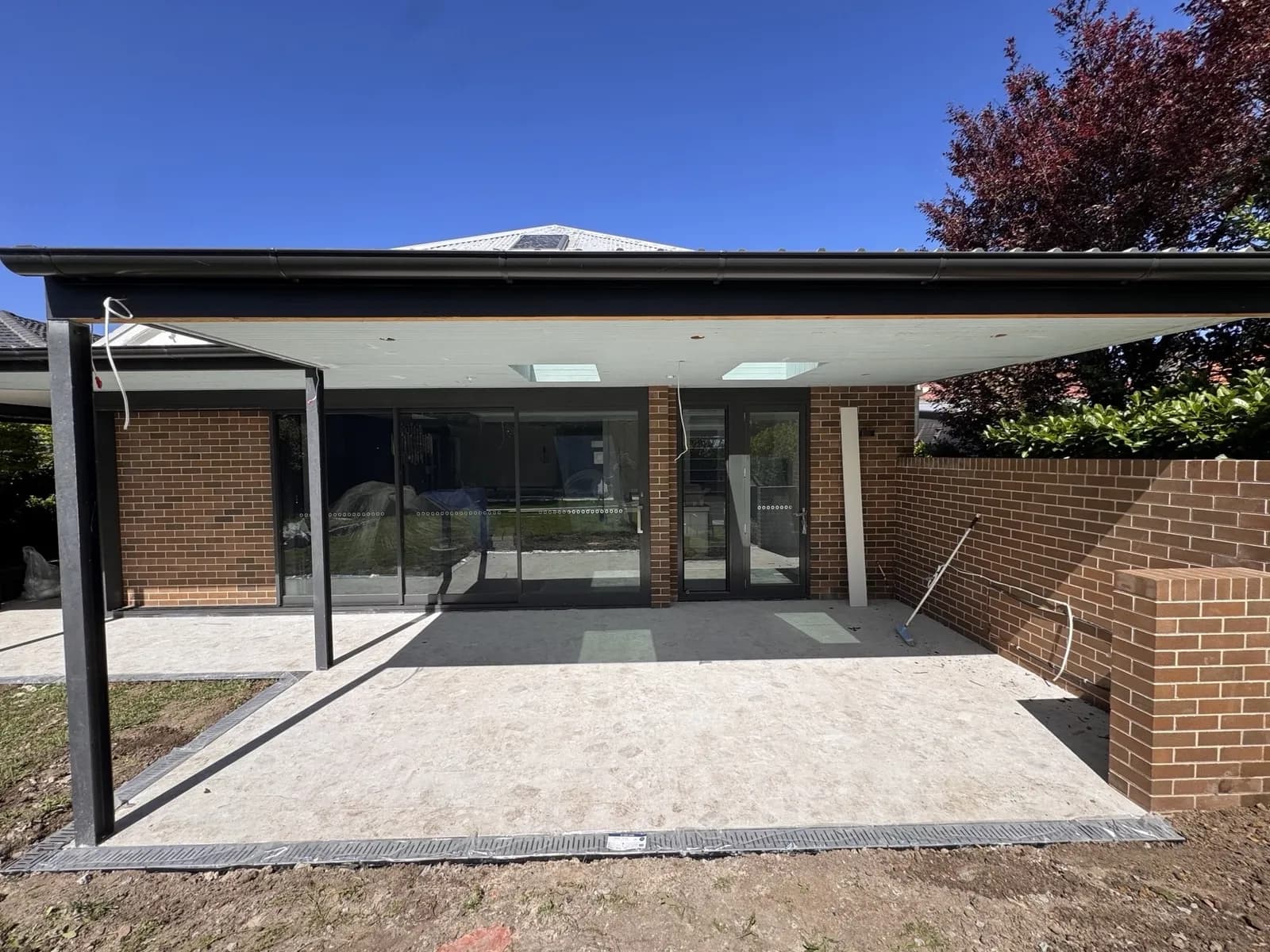
A new outdoor area was flooding.

What we did

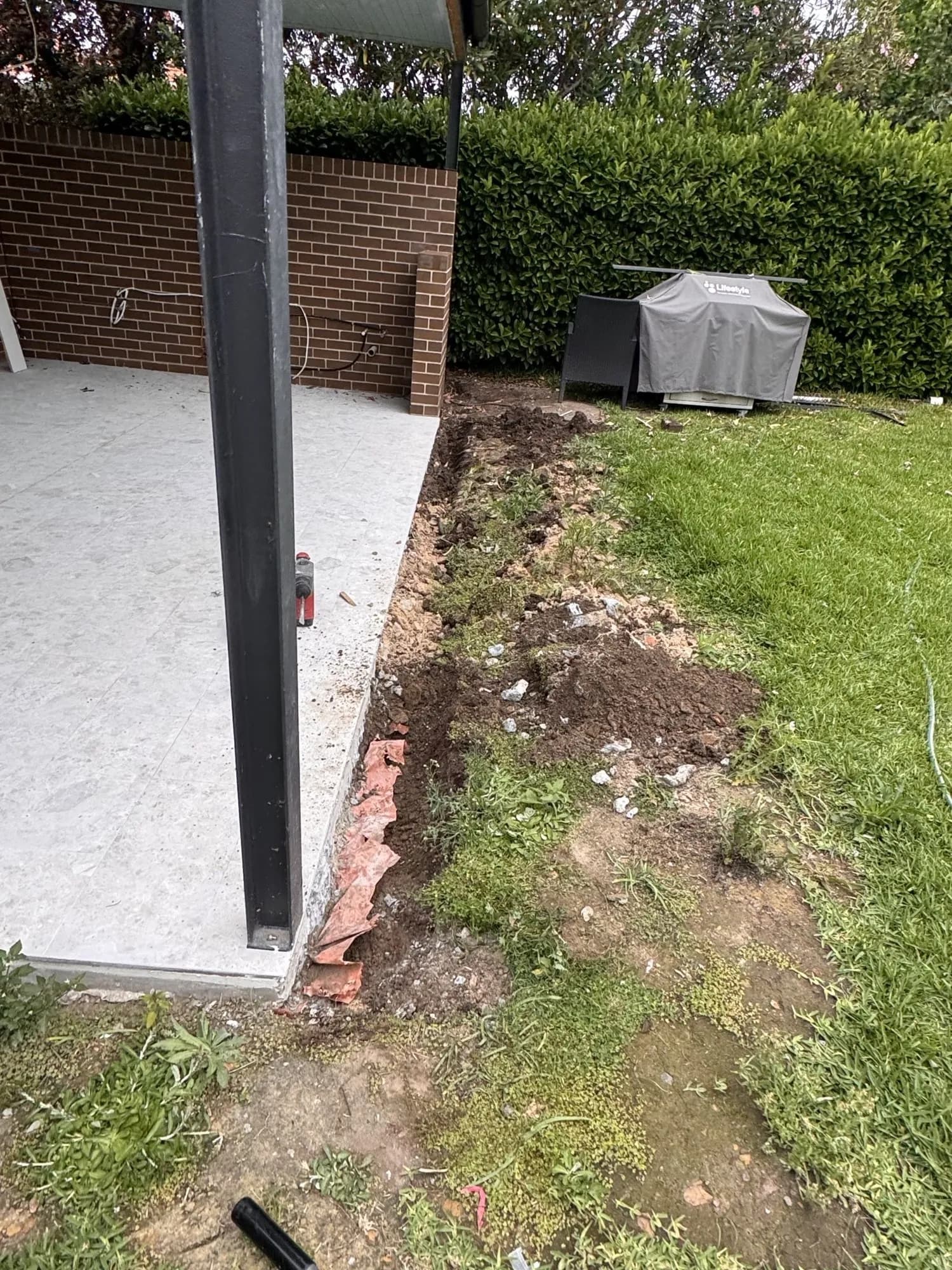
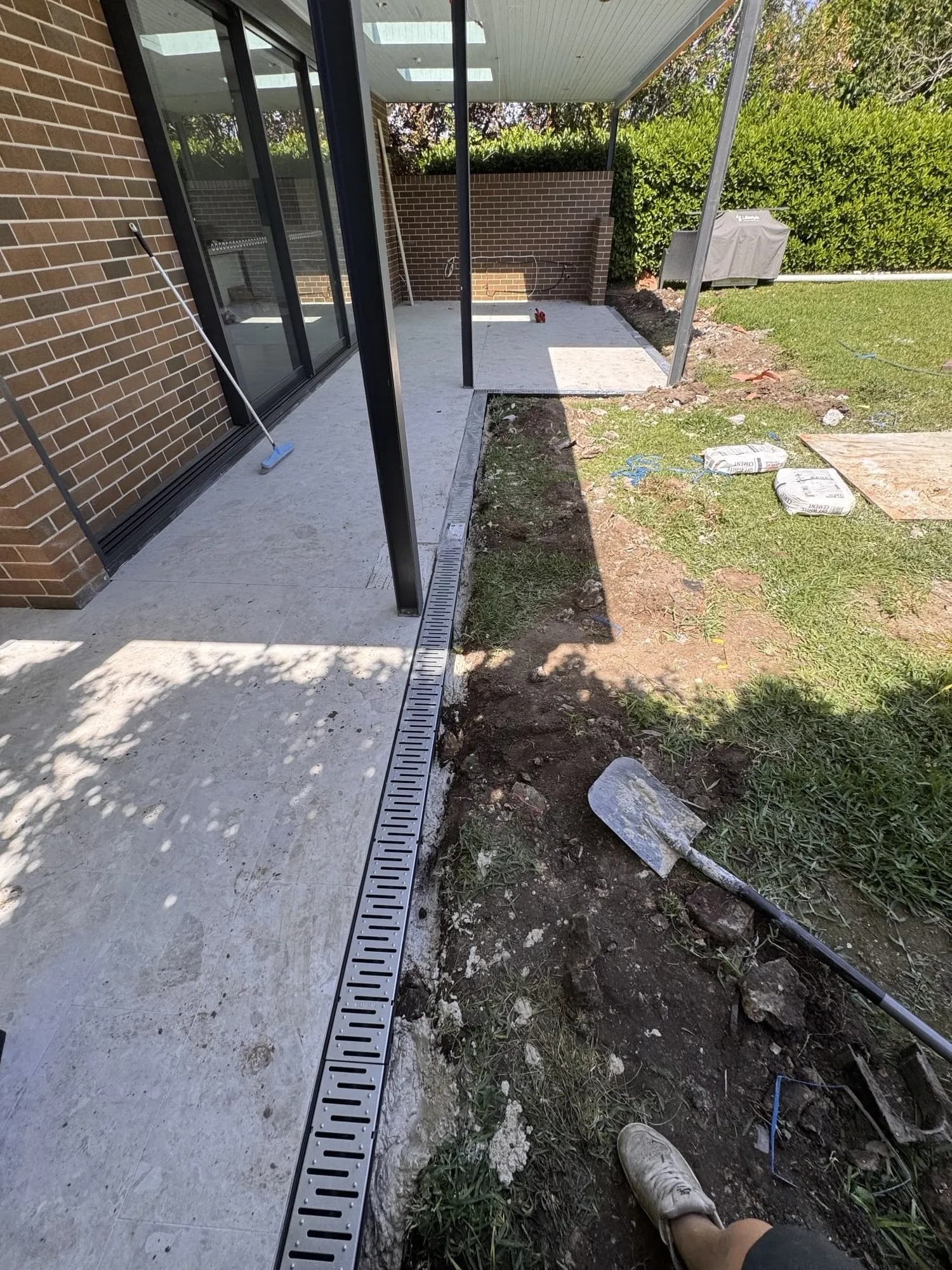
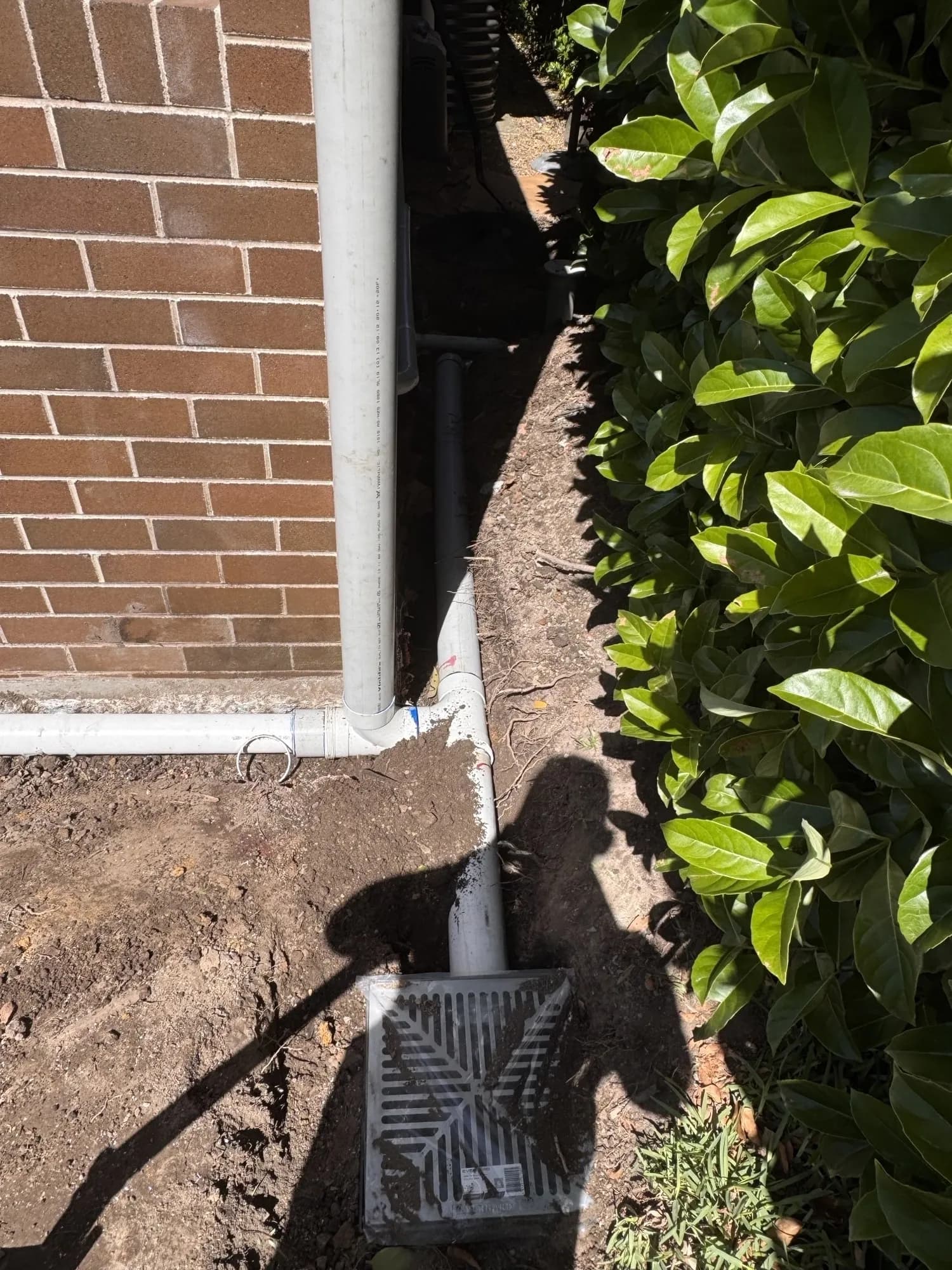
We installed new grated strip drains along the new outdoor area to stop it flooding.

Trench dug along the edge of a new tiled outdoor area before the strip drain went in
New grated strip drain installed along the edge of the outdoor area
Strip drain connected into a grated stormwater pit beside the house
Finished outdoor area with the strip drain along its edge

Rhodes Β·

The problem

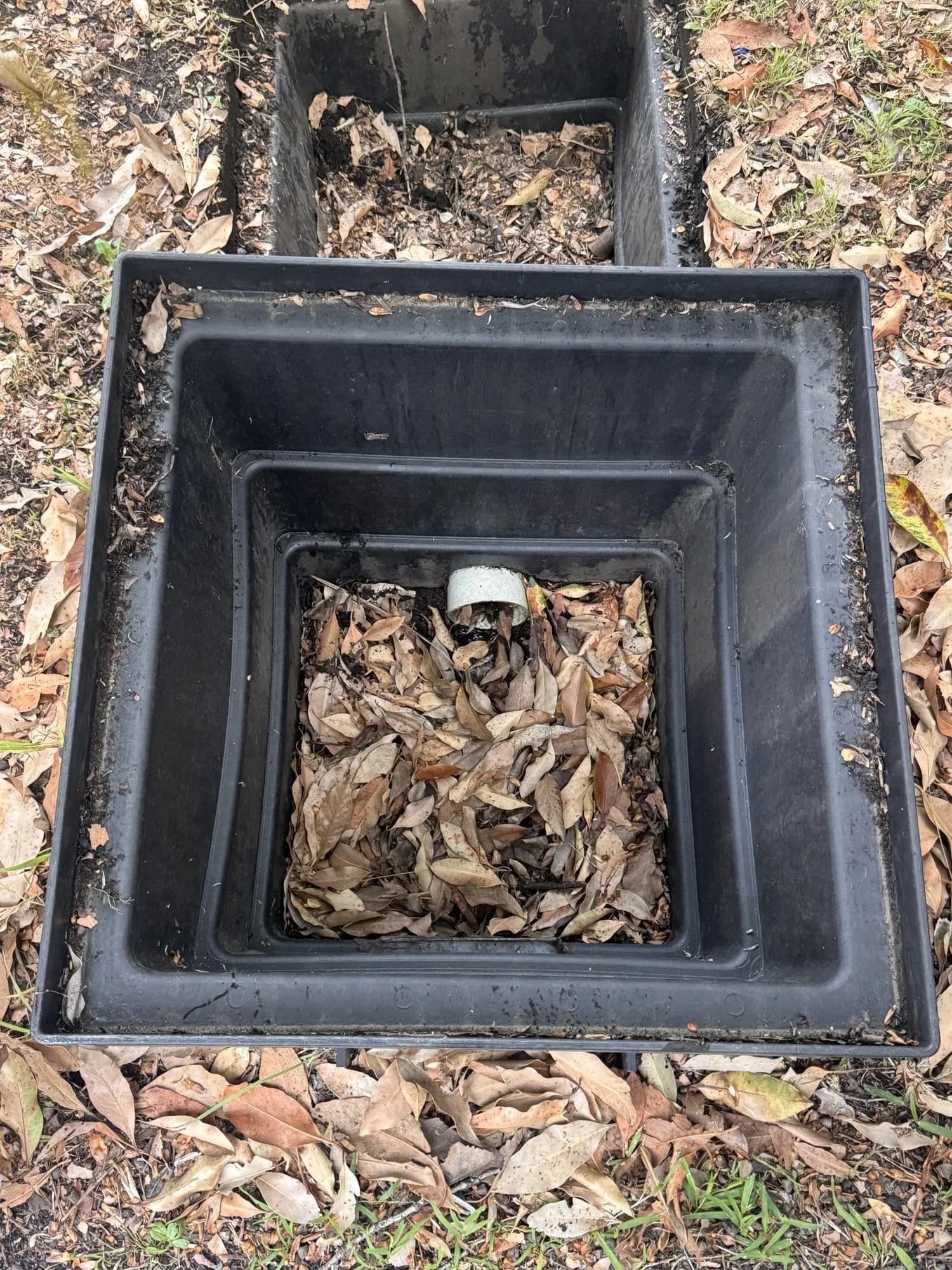
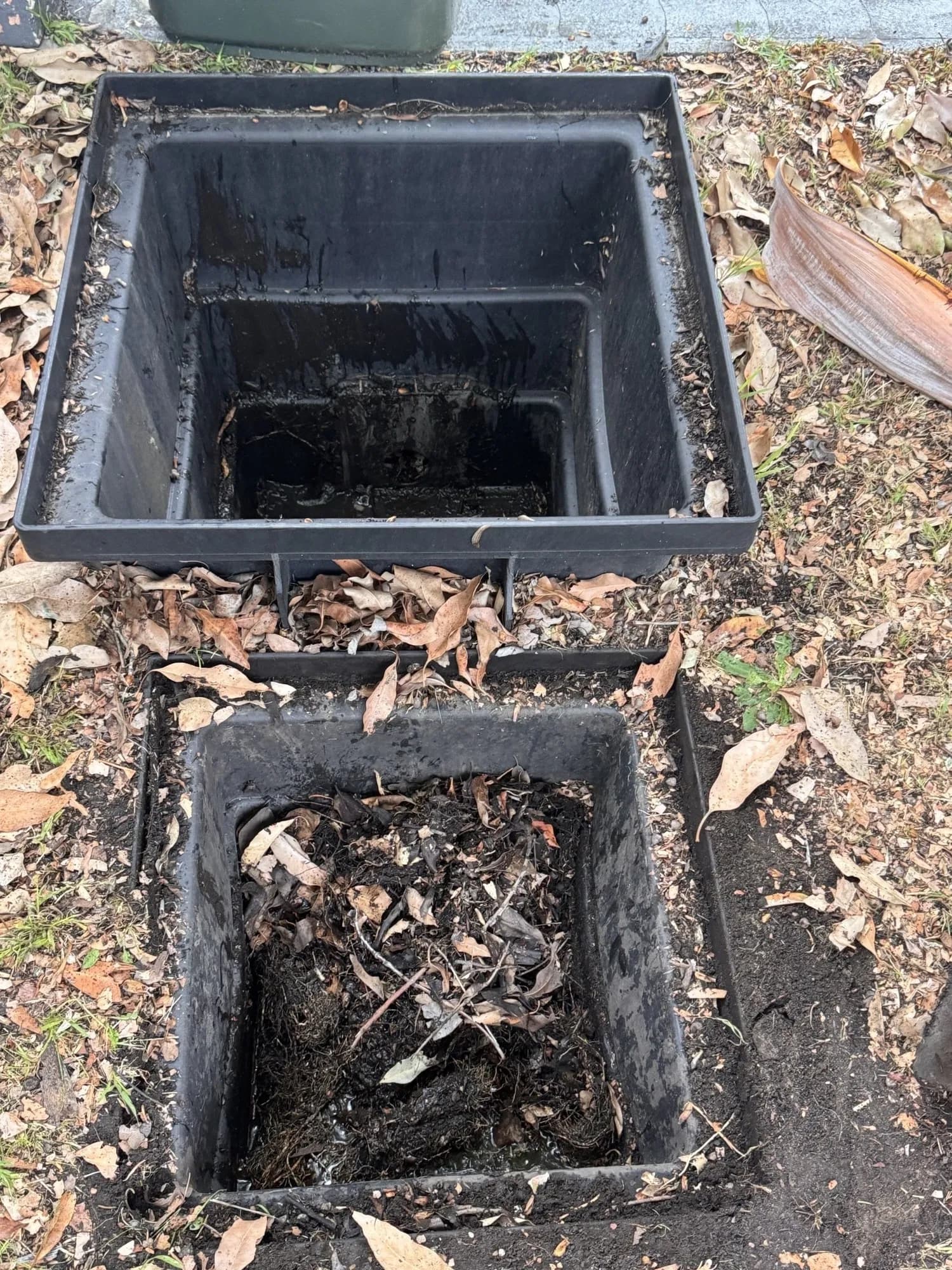
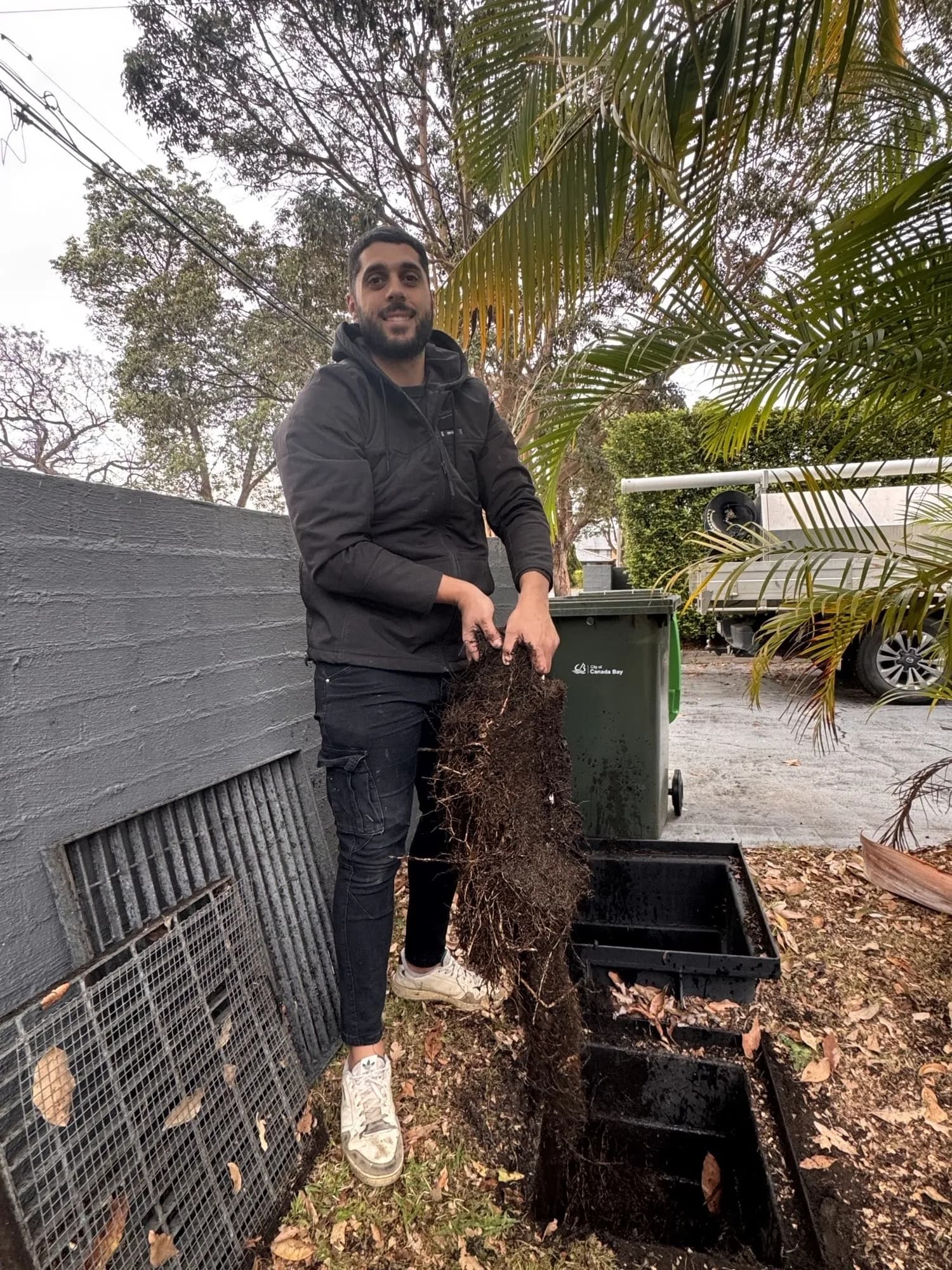
The stormwater was overflowing. Tree roots and debris had blocked the pits.

What we did

We cleared four stormwater pits and a grate by hand, ran a CCTV camera through the stormwater lines, then jet blasted all the stormwater lines on the property to clear the roots.

Stormwater pit filled with leaves and debris before clearing
Stormwater pit packed with mud, leaves and roots
Mr Clog plumber Matthew holding a mat of tree roots pulled from a stormwater pit
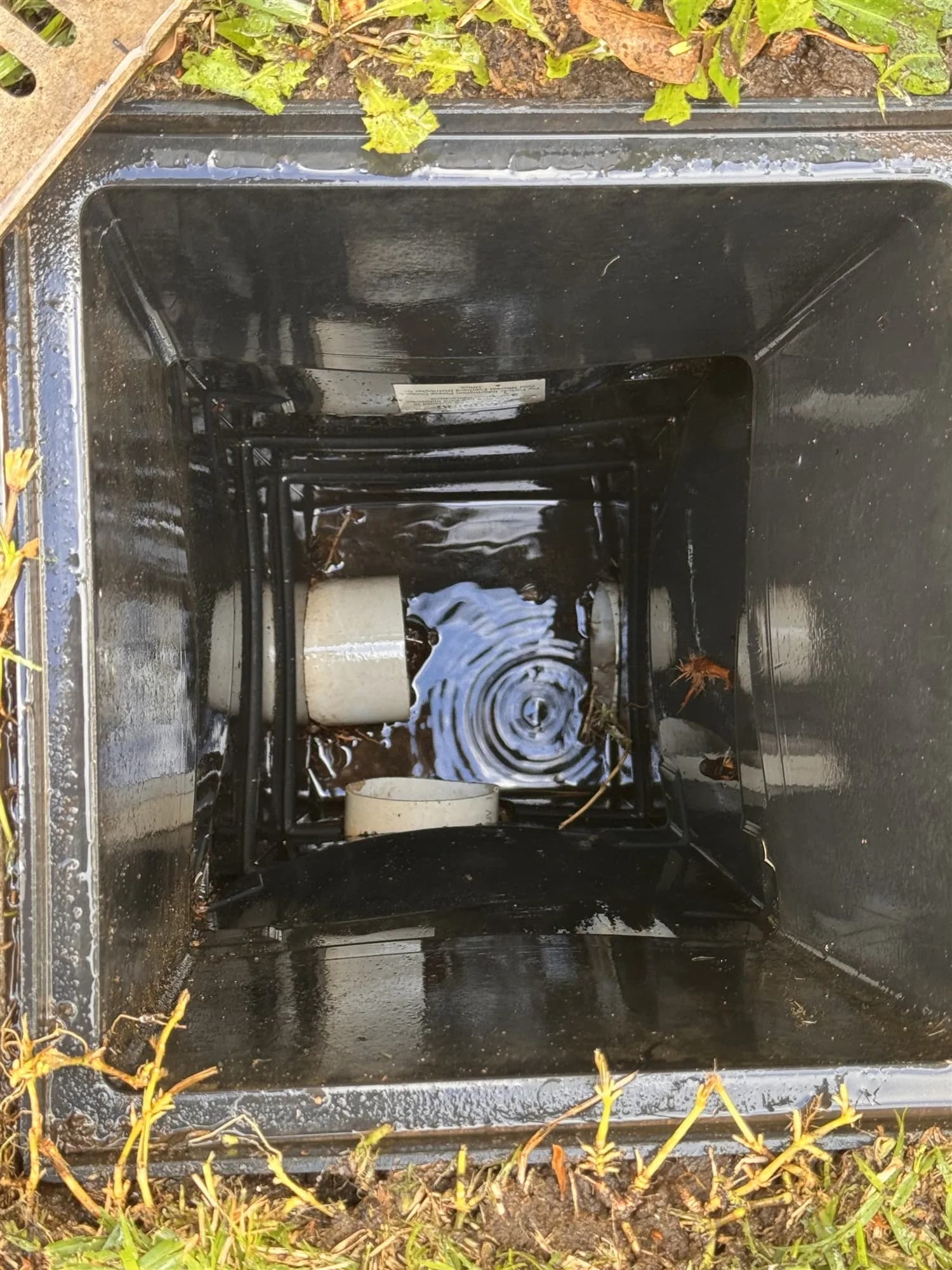
Cleared stormwater pit with water flowing through the pipe
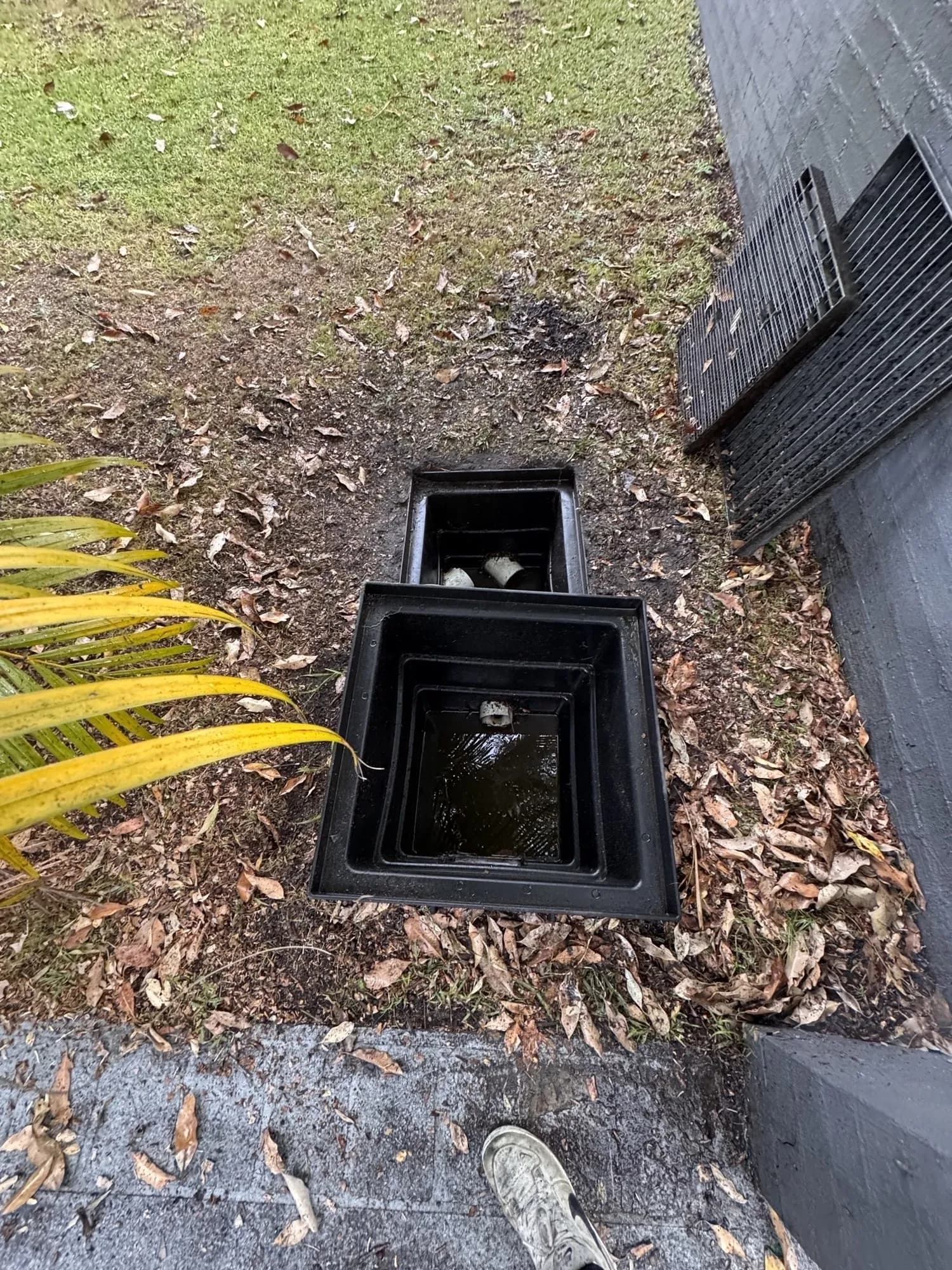
Cleared stormwater pits after the job

Merrylands Β·

The problem

The old stormwater line around the perimeter of the house was cracked and broken.

What we did

We dug the trenches by machine and laid 50 m of new 100 mm stormwater line around the house, connected the downpipes, and installed a new pit and a new line out to the street.

Trench dug by machine along the side of a house for a new stormwater line
New 100 mm PVC stormwater line laid in a trench beside the house
Downpipes connected into the new stormwater line
New stormwater pit and line running out towards the street

Moss Vale Β·

The problem

A new build where the stormwater had to be absorbed on site.

What we did

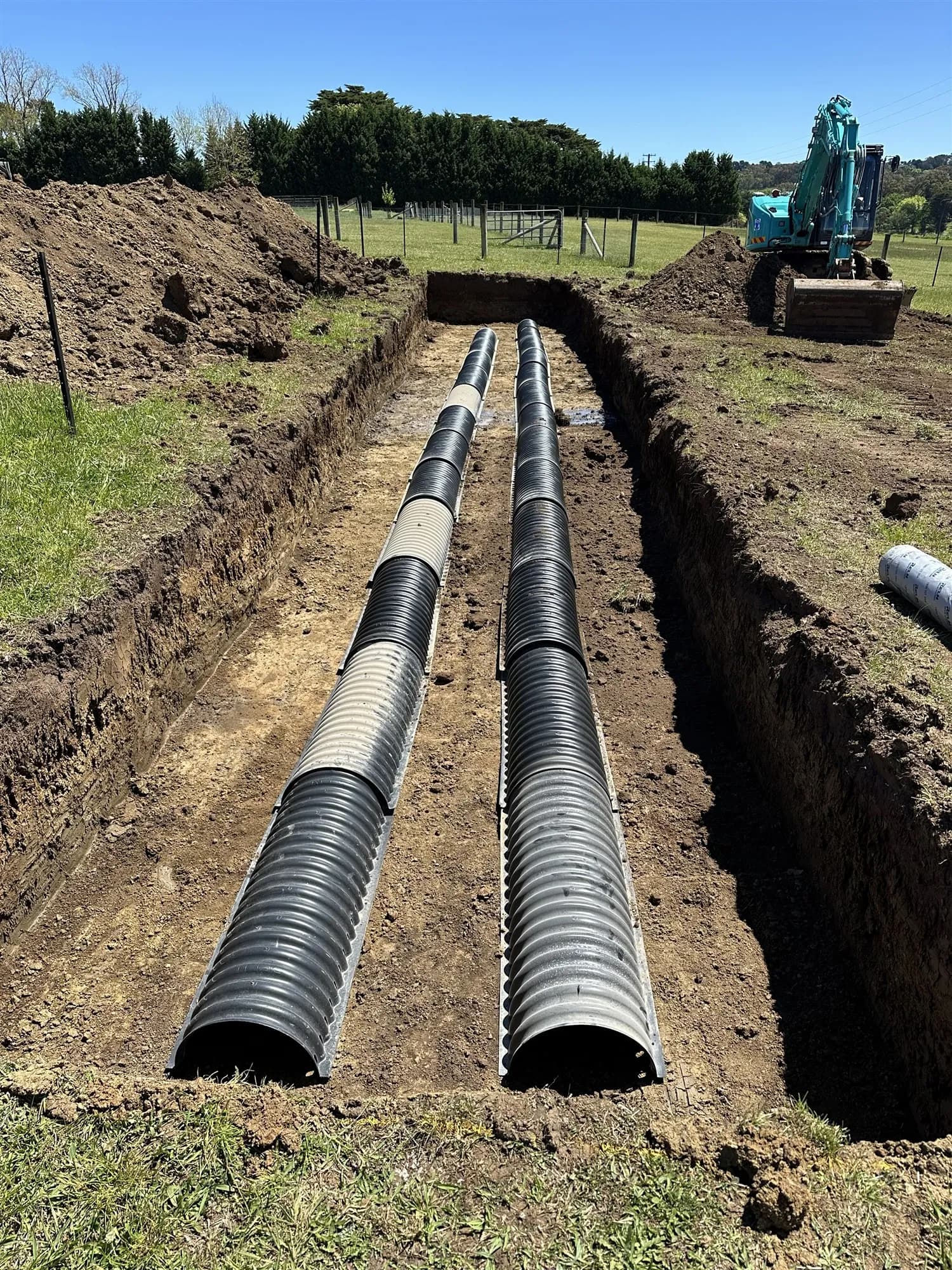
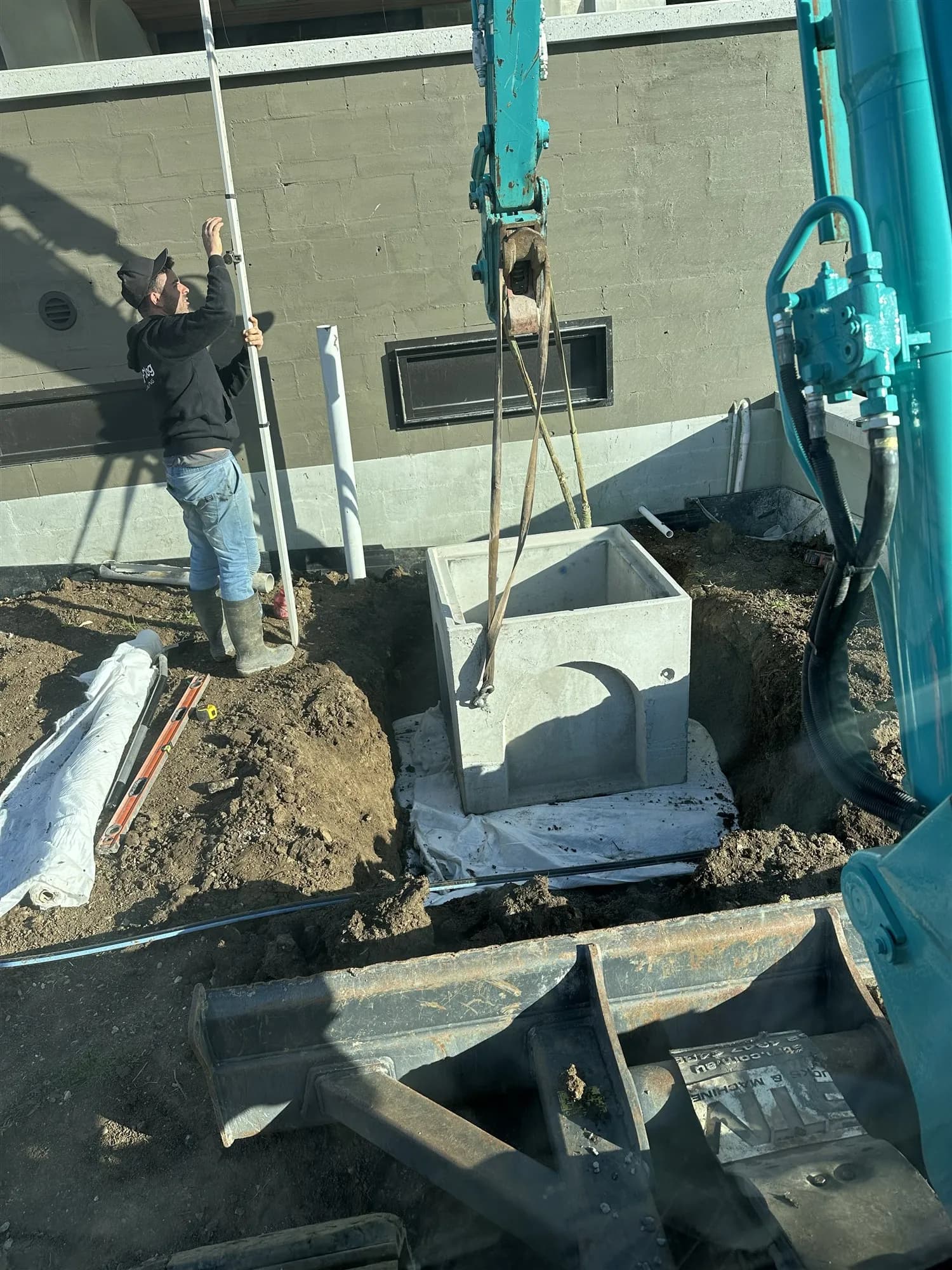
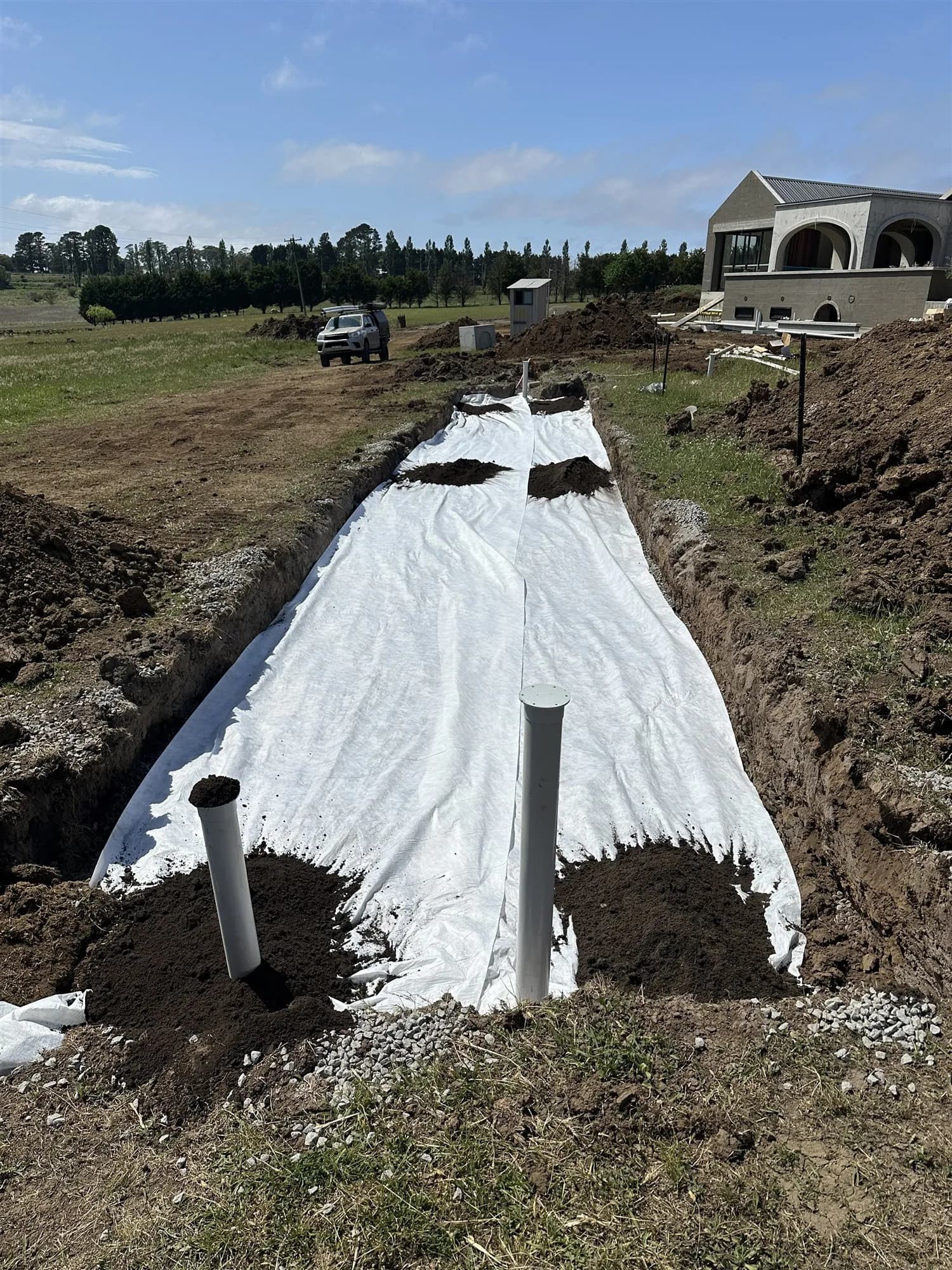
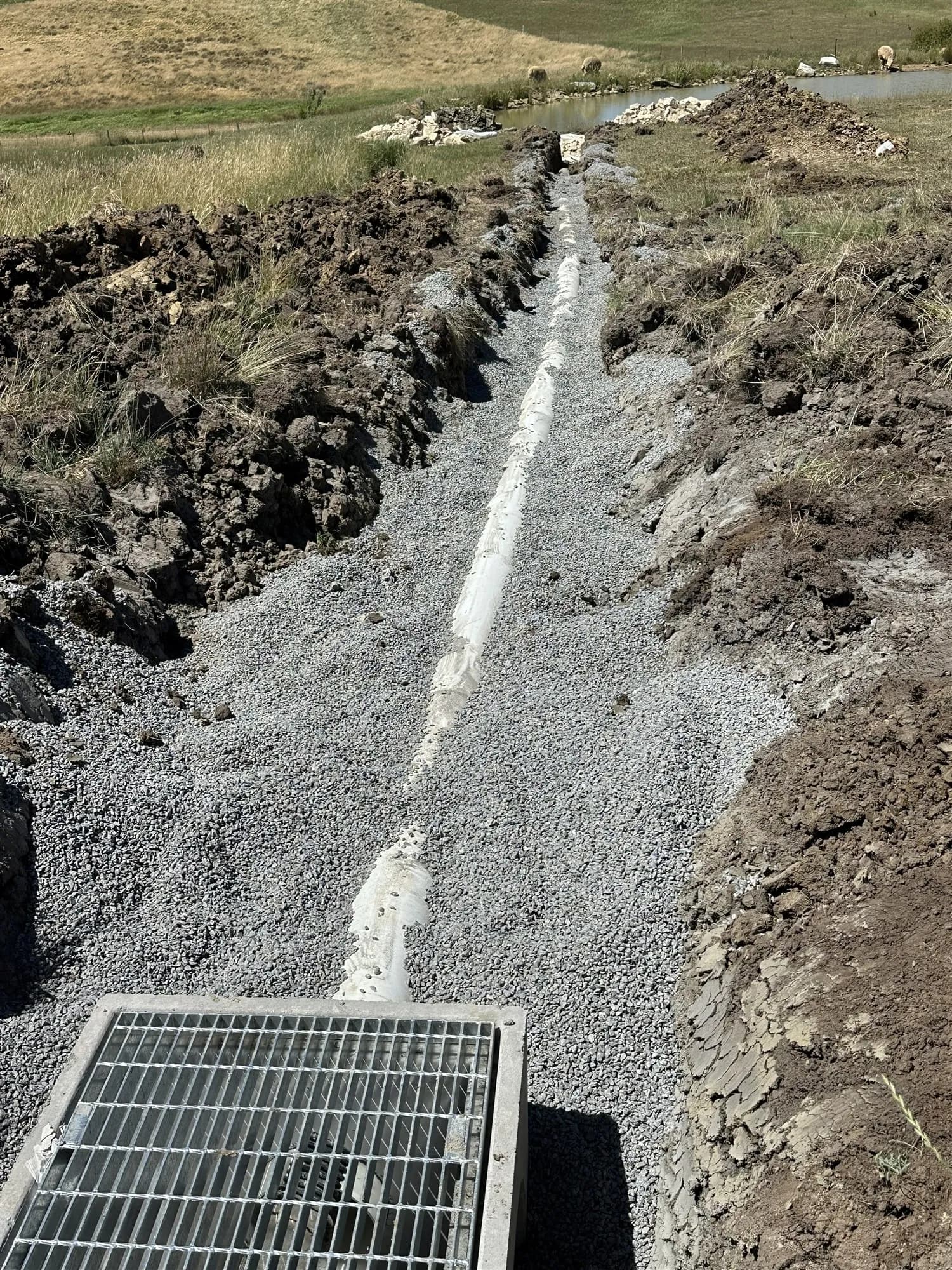
We did all the excavation and trenching, dug the absorption trenches, installed and connected the downpipes, and laid about 350 m of stormwater line with around 15 pits.

Twin corrugated stormwater pipes laid in a long trench, with an excavator behind
Concrete stormwater pit being lowered into place by an excavator beside a new house
Absorption trench covered in geofabric with inspection risers
Grated stormwater pit at the end of a gravel-filled trench

How It Works

01

We inspect your property's drainage β€” pits, pipes, and surface flow β€” to identify where water is pooling or not flowing correctly.

02

We identify the root cause β€” blockage, incorrect fall, undersized pipe, or failed pit β€” and quote the fix.

03

We clear blockages, repair damaged pits, or install new drainage infrastructure as required.

04

We test the system under simulated flow conditions and confirm all water is draining correctly.

Common Questions

Usually either a blocked stormwater pit or pipe, incorrect surface fall, or a drainage system that was never properly installed. We'll identify the cause quickly.

Yes β€” stormwater drainage is licensed plumbing work. DIY installations are not compliant and can create liability issues when selling your property.

Yes β€” we connect roof downpipes to underground stormwater drainage as part of new installations or upgrades.

Yes β€” subsoil drainage and agricultural drains are part of our stormwater drainage service for properties with persistent wet areas.

We run a CCTV drain camera through the line from a pit, a downpipe connection or an inspection opening. It shows what is wrong, whether that is leaves and silt, roots, a crack or a broken length, and how far along the line it is, so we can locate it in the yard before anything is dug.

Often, yes, if the camera shows the pipe still holds its shape. Relining suits cracked or root-damaged lengths, especially under a driveway or paving. Where the line is broken along most of its length, has collapsed or was laid without enough fall, replacing it is usually the better fix.

Yes. Water that can't get away pools against the building and can soak under slabs and into the subfloor, which leads to damp and, over time, can affect footings. A cracked line can also leak into the ground along its length, even when the yard looks dry.

No. Stormwater and sewer are separate systems and must stay that way. If your stormwater has nowhere to go, a licensed plumber can work out a compliant way to get it to a legal point of discharge.

from 37 Google reviews
Read them on Google β†’
Can’t rate this business high enough. I had a very concerning toilet blockage and they came straight out and found and rectified the problem immediately. The price was very reasonable and they went above and be…
Donna Y.Penrith Β· October 2026
Called and arrived within 10 minutes fast and efficient the boys looked after us with the price highly recommended
Cem E.Guildford Β· October 2026
Matt and Anthony from Mr Clog have to be the best plumbing company in Sydney. I called for a blocked drain. I was left impressed by the quality of service I received. They arrived on time, guided me through eve…
Joseph C.Added to site May 2026

See all reviews

Prefer not to call? Send a few details and we’ll come back to you with an upfront fixed price.

How urgent is it?

In a hurry? Call (02) 9139 8945 β€” we answer 24/7.

Call now for fast, reliable service β€” $0 call-out fee, available 24/7.

Call (02) 9139 8945Text