
Quick Answer
If water pools in your yard or overflows from pits every time it rains, your stormwater drains are blocked, usually by leaves, silt or tree roots in the underground pipes, or the pipe itself has cracked or sagged. Clearing the grates helps. A recurring flood needs the line jetted and checked on camera, and a broken line needs relining or replacing.
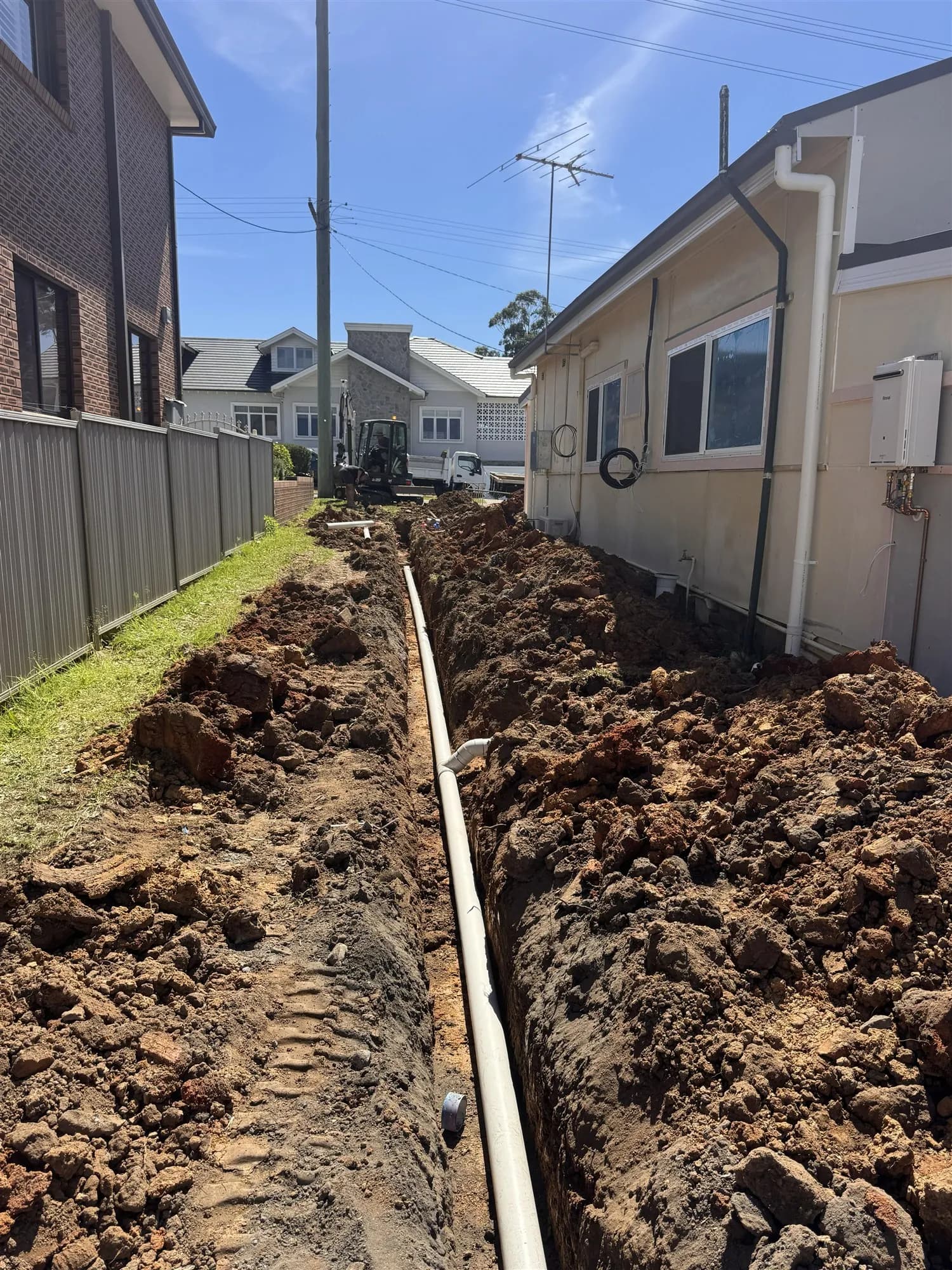
Sydney doesn’t get much rain — until it does. When a heavy downpour rolls through, a blocked stormwater system turns a normal storm into a backyard lake, and water that should be running to the street starts pooling against your house instead.
Left unaddressed, that water finds its way under slabs, into subfloors, and against foundations. Here’s what’s going wrong and how to fix it.
How your stormwater system works
Your stormwater system is completely separate from your sewer. Rain lands on the roof, runs into the gutters, down the downpipes, and into underground pipes that carry it to the street kerb, a council drain, or another legal discharge point. Surface pits and grates around the yard collect ground-level runoff and feed the same network.
It all relies on gravity and clear pipes. Block that path anywhere along the line and the water has nowhere to go but up and out.
Why stormwater drains block
Leaves and debris. The number-one cause in Sydney. Autumn leaf fall clogs gutters, downpipes, and pit grates, then washes down and packs into the pipes.
Silt and sediment. Over years, fine dirt and sand settle in low points of the pipe and gradually choke the flow.
Tree roots. Just like sewer pipes, stormwater lines are a target for roots seeking moisture. If yours blocks every few months, roots are the likely culprit — our guide on tree roots in drains explains the fixes.
Collapsed or misaligned pipes. Old earthenware stormwater pipes crack, sag, and shift over time, trapping debris at the fault.
Warning signs to watch for
Don’t wait for the next big storm to find out. Watch for:
Overflowing pits and grates that fill and spill during rain instead of draining away.
Pooling water in the yard that lingers for hours or days after the rain stops.
Water overflowing from gutters at the downpipe, a sign the pipe below is blocked.
Damp or water in the subfloor after heavy rain — the most serious sign, and a cue to act fast.
Erosion or soggy patches tracing the line of an underground pipe, which can indicate a crack.
What you can do yourself
Regular maintenance prevents most stormwater floods:
Clean your gutters and downpipes before the rainy months — this is by far the highest-impact thing you can do.
Clear pit grates of leaves and debris so surface water can actually get in.
Flush accessible downpipes with a garden hose to check they run freely to the underground line.
Our room-by-room guide to preventing blocked drains covers the indoor side of the same habit. But if water still pools after the surface is clear, the blockage is underground — and that’s beyond a garden hose.
Where is the blockage?
Where the water shows up tells you roughly where to look.
Water spilling over the gutter at one downpipe points to that downpipe or the pipe just below it.
One pit overflowing while others drain means the blockage is between that pit and the next one downstream.
Every pit and downpipe backing up at once points to the main line, usually near where it leaves the property.
Water at the kerb outlet barely trickling in heavy rain, while the yard floods, also points to the main line.
A camera run then confirms what the blockage is, and whether the pipe around it is still sound.
Permanent fixes for a recurring flood
When a stormwater drain blocks repeatedly, clearing the grate is only treating the symptom. The real fix has two stages:
1. Jet-blast cleaning. High-pressure water scours years of silt, leaves, and root matter out of the underground pipe and restores full flow.
2. CCTV inspection. A camera run through the cleaned line shows exactly what’s going on — roots, cracks, sags, or a collapse — so the underlying cause can be fixed rather than just cleared again in three months. Where roots or damage are found, pipe relining can seal the pipe permanently without digging up the yard.
3. Replacing the line. When an old line is broken in several places, has collapsed, or was laid without enough fall, replacing it can be the better answer. That was the case in the Merrylands job in the photo above. Our stormwater drainage page covers how we decide between clearing, relining and replacing.
No street outlet? Soak pits and absorption trenches
Not every property can drain to the kerb. Some, especially on low blocks or in areas without kerb and gutter, discharge to an on-site soak pit or absorption trench, which lets the water seep into the ground.
These fill with silt over time and drain more slowly each year. If a yard that drains to a soak pit starts to flood, the pit may need clearing or rebuilding. Where it was undersized from the start, it may need redesigning to suit the roof area and soil. Your council sets the rules for where stormwater can discharge, so any change should be designed by a licensed plumber.
FAQs
Why does my yard only flood in heavy rain?
A partly blocked drain can cope with light rain but is overwhelmed the moment volume spikes. The flooding is a warning sign that the pipe is running well below its designed capacity — it will only get worse as more debris builds up.
Can a blocked stormwater drain damage my house?
Yes. Water pooling against the building can seep under slabs, saturate subfloors, undermine foundations, and cause rising damp and mould. It’s one of the more damaging plumbing problems to leave unresolved, especially before Sydney’s wetter months.
Can I connect my stormwater to the sewer to fix it?
No — that’s illegal and can cause serious problems for the whole system. Stormwater and sewer must remain separate. If your stormwater has nowhere to discharge, a licensed plumber can design a compliant solution such as a soak well or a rerouted line.
Yard Flooding Every Time It Rains?
Mr. Clog clears blocked stormwater drains with jet-blasting and CCTV inspection across Sydney — so the water goes where it should.