
Quick Answer
An overflow relief gully is the grated drain outside near your bathroom or kitchen. It is there so a blocked sewer overflows outside rather than through your shower or toilet. If it is overflowing, the sewer below it is blocked, or overloaded by rainwater in a storm. Stop using water, and call a plumber, or Sydney Water if your neighbours are affected too.
Water, or worse, bubbling up through the grate outside the back door is unpleasant to look at. But that grate is doing exactly what it was put there to do. The question is why it had to.
An overflowing gully is the sewer telling you it cannot take any more water. The cause is usually one of a few things, and where it sits decides whether you call a plumber or Sydney Water.
What the gully does
An overflow relief gully, often called an ORG, is a short pipe with a grate on top, connected to your sewer line and usually found outside near a bathroom, laundry or kitchen. Like the drains inside, it holds a little water in a trap that stops sewer gas coming out.
The grate is set lower than the drains inside the house and a little above the ground around it. That height is the whole point. If the sewer blocks and starts to fill, sewage comes up at the lowest opening it can find. Because the gully is lower than your shower, floor waste and toilet, that opening is outside, not in your bathroom.
Why it overflows
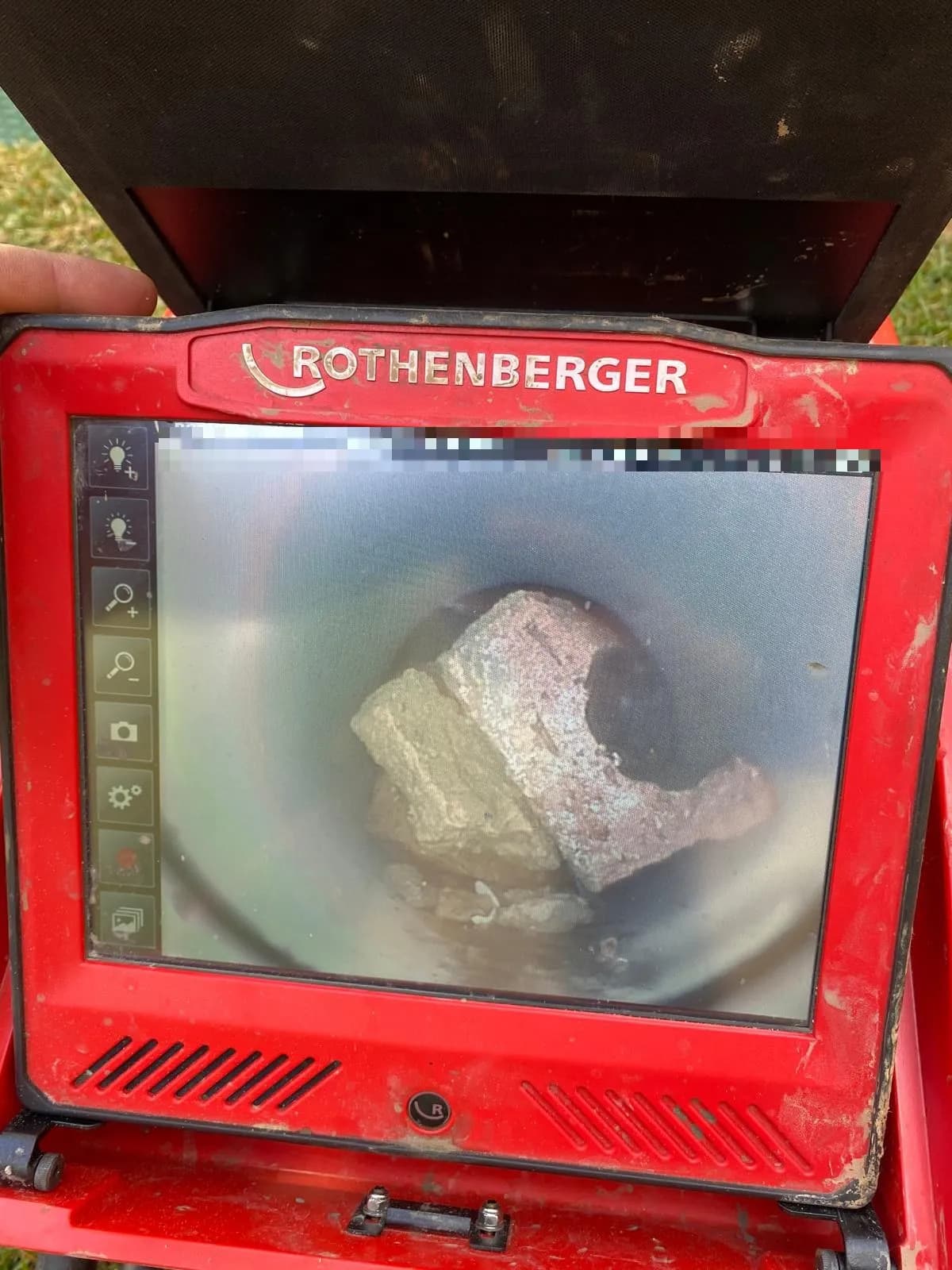
A blockage in your own sewer line. This is the most common cause. Tree roots through old clay joints, wipes, fat, and debris all catch in the pipe between the gully and the street. Our guide to tree roots in drains covers the most common culprit in older suburbs. Sometimes it is something stranger, like the bricks in the photo above.
A blockage in the sewer main. If the shared main in the street or a neighbouring yard blocks, several houses back up at once.
Rainwater getting into the sewer. The sewer is not built to carry stormwater. When rain gets into it, it can fill faster than it drains, and the gully is where the excess comes out.
Inside the house, the signs often come first: a toilet that is slow or keeps blocking, gurgling drains, or water rising in the shower when you flush.
Overflowing only in storms?
If the gully only overflows during or straight after heavy rain, and behaves the rest of the time, rainwater is getting into the sewer somewhere. On your property, the usual ways in are:
A gully that sits too low, because the garden, lawn or paving has built up around it over the years, so surface water runs straight in.
A downpipe or yard drain connected to the sewer instead of the stormwater system. This is not allowed, but it turns up more often than you would expect, especially after old renovations.
Cracked sewer pipes that let water from saturated ground seep in.
A camera inspection of the line, and a look at where each downpipe actually goes, usually finds it. If the problem is your stormwater instead, such as water pooling in the yard, our guide to blocked stormwater drains explains how the two systems differ.
What to do right now
Stop using water. No flushing, showers, washing machine or dishwasher. Every litre you send down has to come out somewhere, and the gully is the best of the options.
Keep people and pets away. Overflow from a gully is usually sewage. Keep children and pets out of the area, and do not handle it without gloves.
Check with your neighbours. If their gully is overflowing too, or their drains are slow, the problem is probably in the shared main.
Do not try to unblock it through the gully. Pushing a hose or rods down an overflowing gully rarely reaches the blockage and can make a mess of the line.
Plumber or Sydney Water?
As a general rule, Sydney Water looks after the sewer mains, and the property owner looks after the private sewer pipes on their property, up to where they connect to the main.
Only your property is affected: the blockage is most likely in your own line. Call a licensed plumber to clear it and, if it keeps happening, to camera the line and find out why. Our blocked drain team does both.
Several properties are affected, or sewage is coming out of a maintenance hole in the street: report it to Sydney Water’s faults line on 13 20 90.
If you are not sure, a plumber can usually tell quickly by checking the line at your property’s inspection point.
What not to do with a gully
Do not cover it, pave over it, or build the garden up around it. The grate has to stay visible and lower than the drains inside, or the next blockage comes up in your bathroom instead.
Do not seal the grate to stop smells or overflows. If it smells, the trap has probably dried out, and a bucket of water poured into the grate refills it.
Do not run downpipes or a hose into it to get rid of rainwater. That is how the sewer gets overloaded in the first place.
FAQs
Why is my overflow relief gully smelling?
Usually because the water in its trap has dried out, which lets sewer gas escape. Pour a bucket of water into the grate to refill the trap. If the smell keeps coming back, or the gully is damp or overflowing, have the line checked.
Is it normal for an overflow relief gully to overflow?
It is doing its job when it overflows, because it is releasing sewage outside instead of inside your home. But a gully should never overflow in normal use. If it does, the sewer is blocked or overloaded and needs attention.
Can I cover or pave over my overflow relief gully?
No. The grate has to stay visible, uncovered and lower than the drains inside the house, or sewage can come up through your shower or floor waste instead. Do not raise garden beds or paving around it.
Gully Overflowing?
Mr. Clog clears blocked sewer lines across Sydney and finds out why they blocked, with no call-out fee and a fixed price before any work starts.