
Quick Answer
For safety, no. Sydney Water treats and tests its water to meet the Australian Drinking Water Guidelines. A filter is still worth having if you dislike the chlorine taste or smell, if older pipes give you discoloured water, or if you drink water from a rainwater tank. Pick the type for the job: an under-sink filter for drinking water, a whole-house filter for every tap.
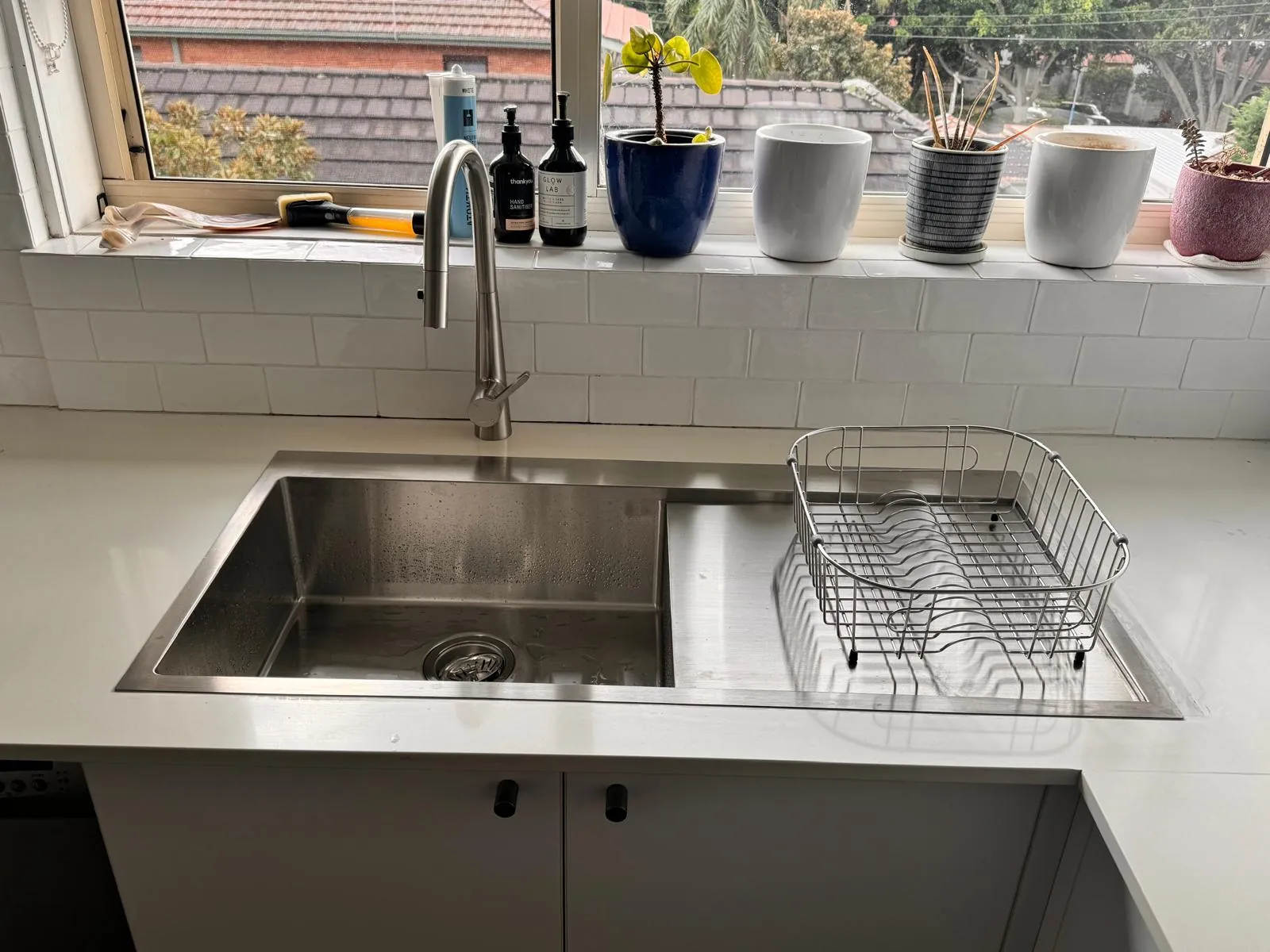
Water filters are sold hard, and it is easy to come away thinking Sydney’s tap water is something to be protected from. It isn’t. But there are real reasons people fit one, and if you are going to, it is worth getting the right type.
Here is a plain guide to when a filter makes sense, and what to check before you buy.
Is Sydney tap water safe?
Yes. Sydney Water treats the water it supplies and tests it to meet the Australian Drinking Water Guidelines, the national standard for drinking water. Its website publishes water quality information if you want the detail.
The water is disinfected so it stays safe all the way to your tap, which is why some people notice a slight chlorine taste or smell. Fluoride is also added for dental health.
So for most homes, a filter is about taste, comfort or a specific problem in the house, not safety.
Good reasons to filter
You don’t like the taste or smell. This is the most common reason. A carbon filter at the kitchen sink takes out most of the chlorine taste and smell, which is all many people want.
You drink water from a rainwater tank. Tank water can pick up whatever is on the roof and in the gutters. NSW Health recommends using the mains supply for drinking where it is available. If you do drink tank water, a suitable filter and a well-maintained tank both matter. Our guide to a rainwater tank pump that is not working covers the tank side.
Your home has older pipework. See the next section.
You want filtered or chilled water on tap. Plenty of people simply like the convenience of a dedicated filtered water tap instead of a jug in the fridge.
Discoloured water and old pipes
Brown or cloudy water usually has one of two causes. If it appears suddenly, often after work on the water main in your street, run the cold tap until it clears.
If it keeps happening, especially first thing in the morning, the problem is usually inside your property. Older Sydney homes often still have galvanised steel water pipes, which rust from the inside over the years. That rust shows up as discoloured water and falling water pressure.
A whole-house filter can catch the sediment, but it treats the symptom. Replacing the old pipe fixes the cause. Our guide to water pressure problems explains how ageing pipework affects your water.
Which type of filter
Jug and tap-mounted filters. Cheap to start, no plumbing needed. Fine for taste, but they treat small amounts of water and need frequent cartridge changes.
Under-sink filters. The most popular plumbed-in option. The filter sits in the cupboard under the kitchen sink and supplies drinking and cooking water, usually through its own small tap on the bench.
Whole-house filters. Fitted where the water enters the home, so every tap, shower and appliance gets filtered water. Useful for sediment from older pipes or a tank supply.
Reverse osmosis systems. These remove more than a carbon filter, including fluoride, and usually need more space under the sink and send some water to the drain.
Three-way mixer taps. If you don’t want a second tap on the bench, a three-way mixer combines the normal hot and cold with a separate filtered water outlet in one tap. The filter still sits in the cupboard underneath. It is a neat option when you are replacing the kitchen tap anyway.
Our water filter installation page covers under-sink and whole-house systems in more detail.
Before you buy
Check what it is designed to remove. Filters are not all the same. Match the system to the reason you want one.
Plan for cartridge changes. A cartridge that is past its life stops doing its job. Follow the manufacturer’s guide for how often to replace it, and factor that into your choice.
Check the space under the sink. An under-sink filter needs room in the cupboard for the filter housing and for changing cartridges, alongside the waste pipe, the dishwasher connection and anything you store there. Chilled or boiling water units also need a power point in the cupboard, which is a job for an electrician.
Buy a certified product. Anything connected to your water supply should carry WaterMark certification.
Use a licensed plumber for plumbed-in systems. An under-sink or whole-house filter connects to the water supply, which in NSW is licensed plumbing work. If you are renovating, it is easiest to fit one at the same time as the rest of the kitchen plumbing.
FAQs
Is Sydney tap water safe to drink without a filter?
Yes. Sydney Water treats and tests the water it supplies to meet the Australian Drinking Water Guidelines. Most people who fit a filter do it for taste, smell or a specific situation in their home, not because the water is unsafe.
Does a water filter remove fluoride?
It depends on the type. Fluoride is added to Sydney’s water for dental health. Common carbon filters generally do not remove it, while reverse osmosis systems generally do. Check what a system is designed to remove before you buy it.
Do I need a plumber to install a water filter?
A jug or a filter that clips onto the tap does not need one. An under-sink or whole-house filter is connected to the water supply, which in NSW is work for a licensed plumber.
Thinking About a Water Filter?
Mr. Clog installs under-sink and whole-house filters across Sydney, with no call-out fee and a fixed price before any work starts.