
Quick Answer
As a general rule in Sydney, Sydney Water looks after the water main and the pipes up to and including your meter, and the sewer main. You look after the water pipes after the meter, and your sewer pipes up to where they connect to Sydney Water’s main, even where part of that line runs outside your boundary. Street stormwater is usually the council’s.
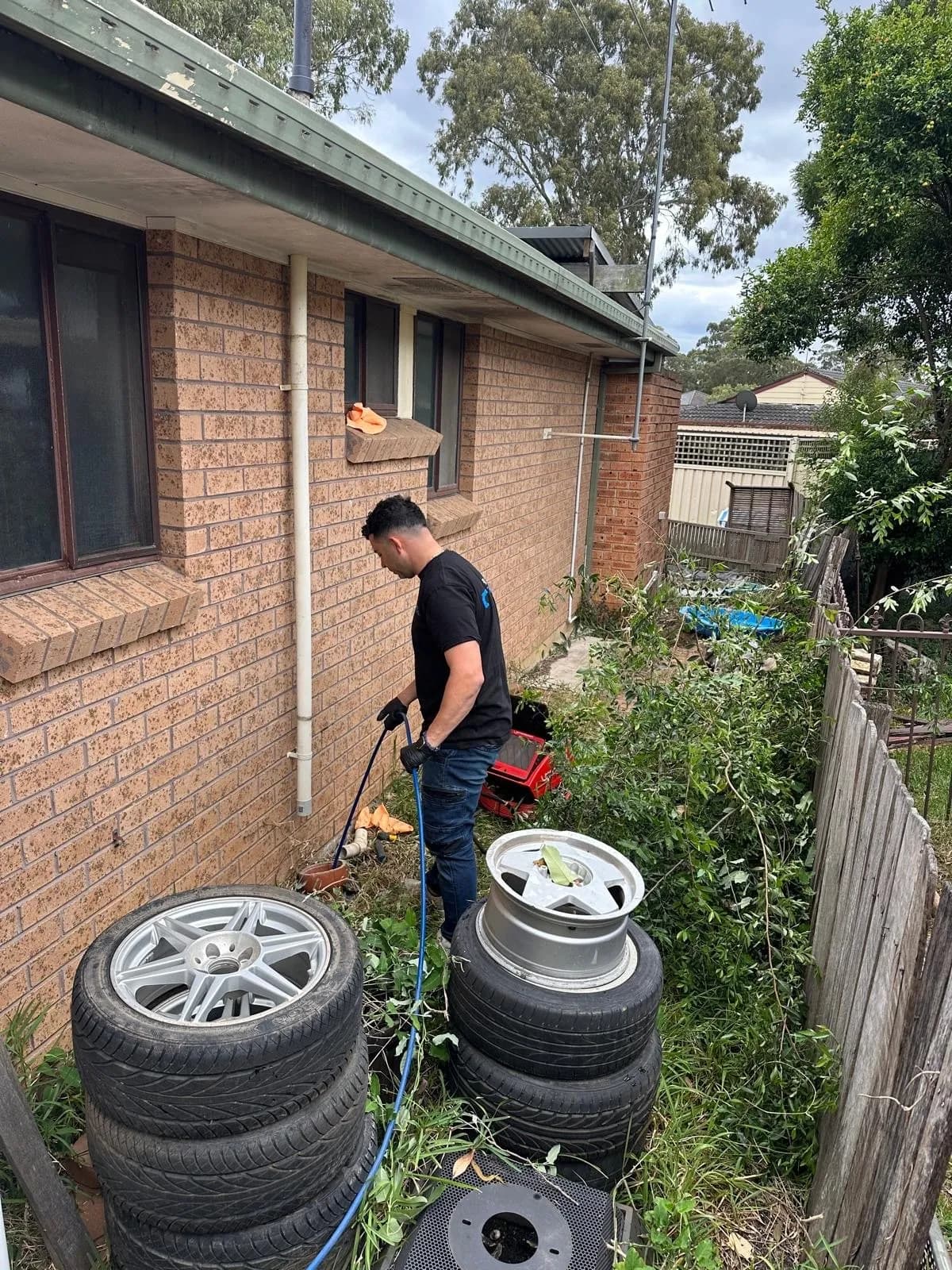
When the sewer backs up or water starts bubbling out of the ground near the meter, the first question is often who should fix it. Call the wrong one and you lose time, or pay for work that wasn’t yours to pay for.
The answer depends on which side of a fairly simple line the problem sits. This guide covers where that line usually falls. Sydney Water’s website has the official detail, and some properties have their own arrangements.
Your water supply
Drinking water reaches your home through Sydney Water’s main in the street, then a short pipe to your water meter, usually near the front boundary.
Sydney Water’s side: the main, and the pipes up to and including the meter. A leak in the footpath, at the meter, or on the street side of it is theirs. Report it on their faults line, 13 20 90.
Your side: everything after the meter, through to every tap in the house. A leak anywhere there is yours, and it shows up on your water bill. Our guide to reading your Sydney Water bill shows how to spot one.
Your sewer
Wastewater leaves your house through your own sewer pipes, which join Sydney Water’s sewer main. That main often runs through backyards rather than the street, sometimes through a neighbour’s yard.
Sydney Water’s side: the sewer main itself.
Your side: generally, your private sewer pipes from the house up to the point where they connect to the main. That can include a section that runs outside your boundary to reach the main.
Most blockages are on the private side: tree roots in old clay joints, wipes, fat, and debris. Our guide to tree roots in drains covers the most common cause in older suburbs.
Stormwater
Stormwater is a separate system from the sewer, and it is usually not Sydney Water’s. The gutters, downpipes, pits and pipes on your property, out to the kerb or other legal discharge point, are yours. The drains in the street are usually looked after by your local council.
So a yard that floods in heavy rain is normally your own stormwater, and a blocked drain in the gutter of the road is the council’s.
How to tell whose it is
Check with your neighbours. If several properties have a blocked sewer or no water at the same time, the problem is probably in the main. Report it to Sydney Water.
If it is only you, it is almost always your own line. A sewer overflowing at the grate outside your house is a classic sign. Our guide to an overflow relief gully overflowing explains what that means.
Sewage from a maintenance hole in the street or a park is Sydney Water’s. Report it on 13 20 90.
If you are not sure, a plumber can usually tell quickly. A camera put through your line shows exactly where a blockage or break is, and whether it sits before or after the connection to the main. Our sewer repairs work starts with that.
If the sewer backs up
Whoever ends up fixing it, a few things limit the mess while you work it out.
Stop using water. Every flush, shower and load of washing adds to what is already backing up. Ask everyone in the house to hold off until the line is clear.
Keep people and pets away from any overflow. Sewage carries bacteria, so wear gloves if you have to move anything, and wash your hands well afterwards.
Do not pour chemicals down. Drain cleaners rarely shift a sewer blockage, and they make the water dangerous for whoever opens the line next.
Take a photo of where the water is coming out. It helps a plumber, Sydney Water or an insurer understand what happened.
Apartments and strata
In a unit block, the same Sydney Water line still applies at the boundary, but the private pipes inside the property are usually shared. Pipes that serve more than one unit are generally common property, so the owners corporation looks after them. Pipes that serve only your unit may be yours, depending on the strata plan and by-laws. Our guide to who pays for a strata plumbing leak goes through it.
Building near a sewer main
If you are planning an extension, a pool, a deck or a granny flat, check whether a Sydney Water main runs through the property first. Building over or near one needs Sydney Water’s approval, and it can change where or how you build. Our Sydney Water applications page explains that process.
FAQs
Who is responsible for a leak near my water meter?
As a general rule, Sydney Water looks after the water main and the pipes up to and including your meter, and you look after the pipes after the meter. If the leak is on the street side of the meter, or at the meter itself, report it to Sydney Water. If it is on your side, call a plumber.
Is a blocked sewer my problem or Sydney Water’s?
Generally, you look after the sewer pipes from your house to the point where they connect to Sydney Water’s main, and Sydney Water looks after the main. If only your property is affected, the blockage is most likely in your own line. If neighbours are affected too, it may be in the main.
What is Sydney Water’s faults number?
Sydney Water’s faults and emergencies line is 13 20 90. Use it for a burst main, a leak at or before the meter, or sewage overflowing from a maintenance hole or affecting several properties.
Problem on Your Side of the Line?
Mr. Clog clears and repairs private sewer and water lines across Sydney, with no call-out fee and a fixed price before any work starts.