
Quick Answer
A shower leaking into the wall usually shows up outside the shower: swollen skirting, bubbling paint, mould or damp carpet next door, or a stain on the ceiling below. The water gets out through cracked grout, perished silicone, a failed waterproofing membrane, the floor waste, or the pipes and mixer inside the wall. A water meter test tells you whether it is the pipes or the shower itself.
A leaking shower rarely looks like a leak. The tiles inside look fine. What you notice is the skirting board in the hallway starting to swell, a patch of paint that will not stay put, or a musty smell in the bedroom next door.
Because the water travels inside the wall and under the floor before it shows, a small leak can run for months. The sooner you confirm it, the smaller the repair.
Warning signs
Swollen or stained skirting boards on the other side of the shower wall, or in the doorway to the bathroom.
Bubbling, flaking or peeling paint on a wall that backs onto the shower.
Mould or a musty smell in the room next door, a wardrobe, or a cupboard that shares the wall.
Damp or stained carpet along the wall next to the bathroom.
A stain on the ceiling below, if the bathroom is upstairs.
Grout that stays dark long after the shower has dried, or tiles that sound hollow when tapped or have started to lift.
Where the water gets out
There are two different kinds of shower leak, and the difference matters for the fix.
Leaks from the pipes. The water supply pipes and the mixer body sit inside the wall and are under pressure all the time. If one of them leaks, it leaks whether anyone has showered or not.
Leaks from using the shower. These only happen when water is running. The usual paths are cracked or missing grout, perished silicone at the corners and where the wall meets the floor, a failed waterproofing membrane under the tiles, and a poor seal around the floor waste.
Test 1: the water meter
This tells you which kind of leak you have. Turn off every tap and water-using appliance in the house. Note the reading on your water meter, or take a photo of it, then leave everything off for at least an hour without using any water.
If the meter has moved, water is escaping from a pressurised pipe somewhere, which could be the pipes behind the shower. If the meter has not moved, the pipes are probably sound and the leak only happens when the shower is in use. Our guide to detecting a hidden water leak explains the meter test in more detail.
Test 2: walls, then floor
If the meter test points to a leak during use, narrow it down. Start with everything dry. Use the hand shower, or a cup, to wet only the walls for ten minutes, keeping water off the floor as much as you can. Check the signs outside the shower over the next day.
Once everything has dried out, do the same with only the floor and the waste. If the damp returns after one test but not the other, you know which area to look at.
Do not flood the shower floor on purpose to test it. If the membrane has failed, you will push more water into the wall and floor than normal use would.
Test 3: look closely at the grout and silicone
With a torch, check every grout line and every silicone join: the corners, where the walls meet the floor, around the mixer and shower arm, and where the screen meets the tiles. Look for cracks, gaps, missing grout, and silicone that has lifted, gone black, or peeled away.
A small gap is enough. Water that gets behind the tiles has nowhere to go but into the wall.
What the fix usually involves
Grout and silicone. If that is the only path, raking out and regrouting, then resealing the joins, can stop the leak. It is often the cheapest fix, and worth trying first when the membrane is sound.
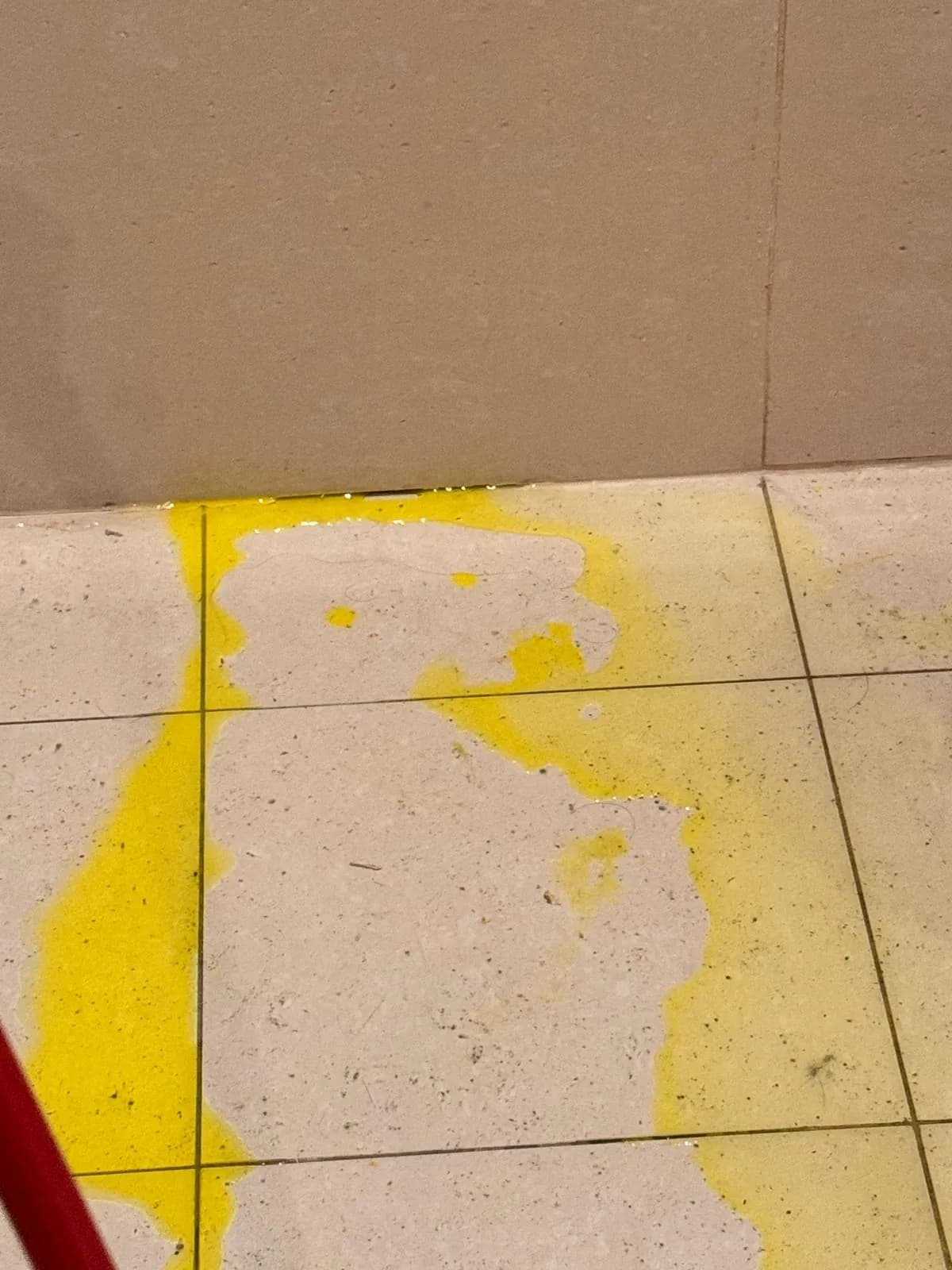
The pipes or mixer. A leaking pipe or mixer body in the wall needs a plumber to open the wall at the right spot and repair it. Finding that spot without taking out half the wall is the point of leak detection. Tracer dye, like the job in the photo above, and moisture and thermal readings show where the water is escaping.
A failed membrane. If the waterproofing under the tiles has failed, resealing the surface only slows the leak. The shower needs to be stripped back, rewaterproofed and retiled. In NSW, waterproofing is specialist work that must be done by a licensed contractor. At that point it is often worth looking at what else in the bathroom should be done at the same time, and our bathroom renovation team can help plan it.
If you live in an apartment
In an apartment, the first sign is often a call from the neighbour below about a stain on their ceiling. Let your strata manager know early. Responsibility for a leak in a strata building depends on where it starts and the building’s by-laws, and a report showing where the water is escaping makes that conversation much simpler.
If the water is coming up at the base of the toilet rather than near the shower, our guide to a toilet leaking at the base covers that separately.
FAQs
How do I know if my shower is leaking behind the tiles?
Look outside the shower rather than inside it: swollen skirting boards, bubbling or peeling paint, mould or damp carpet on the other side of the shower wall, or a stain on the ceiling below. Grout inside the shower that stays dark long after use is another sign.
Can I fix a leaking shower by resealing it?
Sometimes. If the leak is through cracked grout or perished silicone at the joins, regrouting and resealing can stop it. If the waterproofing membrane under the tiles has failed, a surface reseal only slows it down, and the shower needs to be stripped and rewaterproofed.
Is a leaking shower covered by insurance?
It depends on the policy. Many home policies treat gradual leaks and failed waterproofing differently from sudden damage, so check yours or ask your insurer. A leak detection report that shows where the water is escaping helps either way.
Think Your Shower Is Leaking?
Mr. Clog finds shower and bathroom leaks across Sydney without pulling the room apart, with no call-out fee and a fixed price before any work starts.