
Quick Answer
To find a bathroom leak, work out when it happens. If the water meter moves with everything off, a pipe under pressure is leaking. If it only appears after a shower, a bath, a flush or using the basin, that fixture is the source. Then check where the water shows: the floor, a wall next door, or the ceiling below.
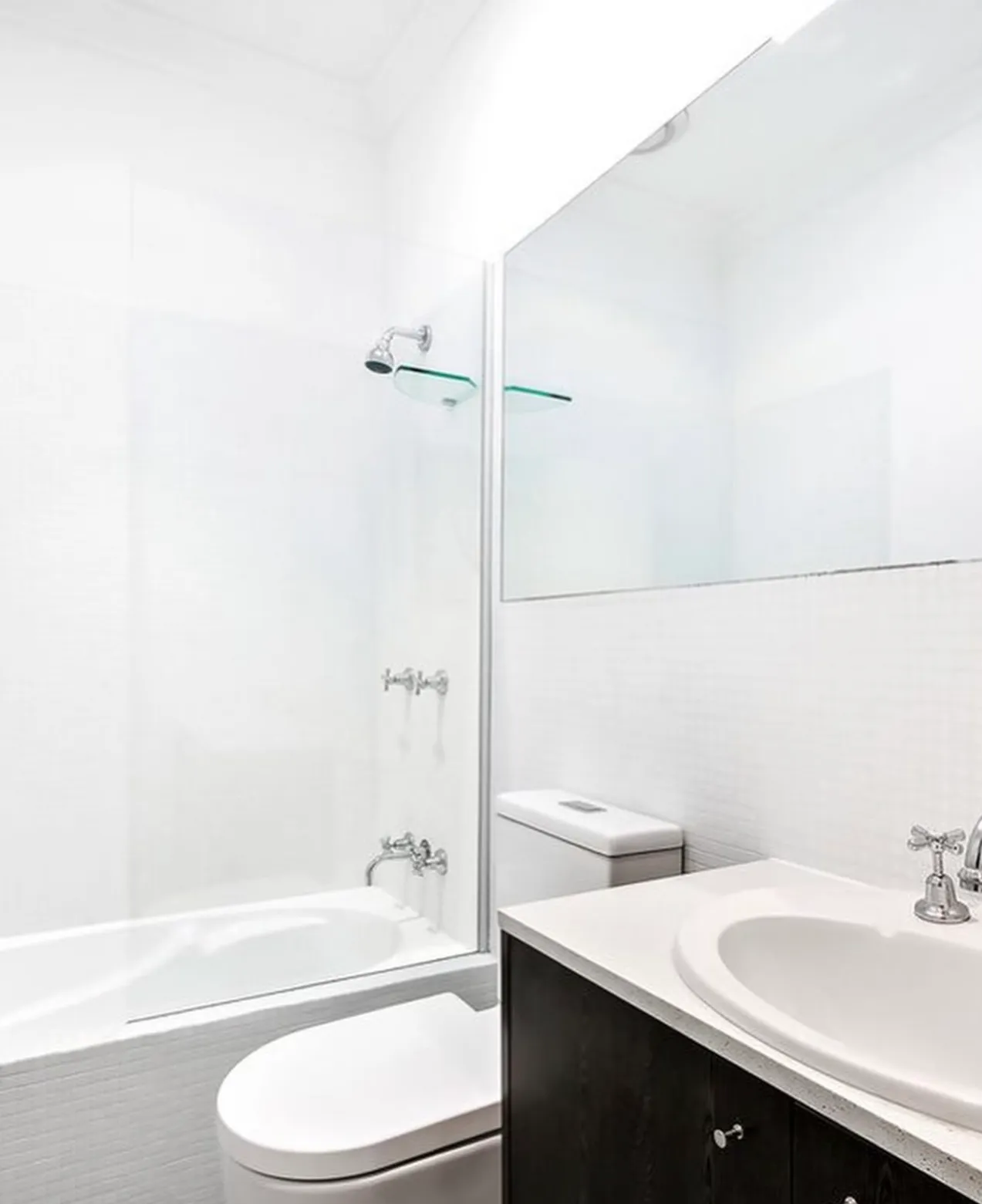
A bathroom has more water in it than any other room, packed into a small space. When something leaks, the water can show up a long way from where it started: on the floor outside the shower, on a wall in the next room, or as a stain on the ceiling downstairs.
The good news is that most bathroom leaks come from a short list of places, and a few simple tests will usually tell you which one.
Do this first
If water is running and won’t stop, turn it off. Toilets and vanities usually have a small isolation valve on the wall. If not, use the main stop tap beside the water meter.
If water is coming through a ceiling or near a light, keep clear of it and turn off the power to that area at the switchboard. Our guide to water leaking through the ceiling covers what to do next.
Otherwise, stop using the bathroom for a few hours, dry everything, and take photos. A dry start makes every test below clearer.
When does it leak?
This one question narrows it down more than anything else.
All the time. Read the water meter with every tap off and nothing running, wait 30 to 60 minutes, and read it again. If it has moved, a pipe or fitting under mains pressure is leaking. That is a pipe in the wall or floor, a supply hose, or a toilet cistern that runs on.
Only after the shower or bath is used. The water is getting out through the shower or bath itself: the grout, the silicone, the screen, the waste, or the waterproofing underneath.
Only after a flush, or only when the basin is used. Then it is the toilet or the vanity.
Test one fixture at a time, with a dry floor between each: a five-minute shower, then the bath, then a few flushes, then the basin. The one that brings the water back is your source.
Where does it show?
On the floor outside the shower or bath. Usually water escaping through the shower or around the bath, then spreading under the tiles.
Around the base of the toilet. Usually the toilet itself, not the floor. Check for condensation first on a humid day.
Inside the vanity cupboard. The basin waste, its trap, the tap, or the flexi hoses to it.
On a wall in the next room or a hallway: peeling paint, swollen skirting boards, mould low down. Often a shower behind that wall.
On the ceiling below. In a two-storey home or an apartment, a stain under a bathroom is one of the most common signs of a shower or bath leak.
A musty smell with no water. Moisture may be trapped behind tiles. A sewer smell is different: often a floor waste that has dried out.
Shower and bath
Showers cause more bathroom leaks than anything else. Grout cracks, silicone shrinks away from corners, and the waterproofing membrane under the tiles can break down over the years. Water then gets behind the tiles and into the wall or floor.
Look closely at the corners and the joint where the wall meets the floor, at the seals around the screen, and around the tap and shower arm. Our guide to a shower leaking into the wall walks through three tests, one after another.
Baths leak at the waste and overflow, at the silicone along the edge, or through the floor underneath. Our guide to a bath leaking underneath covers the checks and the dye test we use to confirm it.
Toilet and vanity
A toilet can leak from its supply hose, the seal between the cistern and the pan, or the connector where the pan joins the drain. Water at the base after flushing usually means the connector. Our guide to a toilet leaking at the base covers all five usual causes.
Under the vanity, dry everything and run the basin. Drips while the tap runs point to the tap or its hoses. Drips only when the basin drains point to the waste and trap. A rusty or bulging braided hose should be replaced straight away.
A pipe in the wall
If the meter moves with everything off and the toilet isn’t running on, a pipe in the wall or floor is the likely cause. These leak all the time, whether the bathroom is used or not.
Signs include a damp patch that never dries, tiles that sound hollow or lift, or a wet patch that grows overnight. Finding it means testing the lines and listening for the leak through the wall, rather than removing tiles on a guess. Our leak detection service does exactly that.
FAQs
How do I find where my bathroom is leaking from?
Work out when it leaks. Read the water meter with everything off: if it moves, a pipe under pressure is leaking. If not, use one fixture at a time (shower, then bath, then a toilet flush, then the basin) and check for new water after each. The one that makes it worse is the source.
Why is my bathroom floor wet outside the shower?
Usually water is escaping through cracked grout or failed silicone in the shower, or past a waterproofing membrane that has broken down. A shower screen that leaks at its seals, or a blocked floor waste that overflows, can do the same. Water on the floor outside a toilet points to the toilet’s seals or supply hose instead.
Is a bathroom leak covered by insurance?
It depends on your policy. Many cover sudden damage, such as a burst hose, but not a slow leak from worn grout or waterproofing. In an apartment, the strata scheme may be responsible for some pipes. Keep photos and the plumber’s report, and check with your insurer before work starts.
Can’t Find the Leak?
Mr. Clog traces bathroom leaks across Sydney without lifting more tiles than we need, with no call-out fee and a fixed price before any work starts.