
Quick Answer
A leaking bath usually shows up beside or below it: swollen skirting or floorboards, loose tiles at the base, mould on the bath panel, or a stain on the ceiling below. The water most often gets out through perished silicone along the edge, the waste or overflow washers, or the tap and spout in the wall. A water meter test and a fill-and-wait test tell you which.
A bath that leaks rarely puddles on the bathroom floor. The water runs under the bath, into the floor or the wall behind it, and turns up somewhere else: a skirting board that has started to swell, a soft patch of floor, or a brown ring on the ceiling of the room below.
Because it travels before it shows, a bath leak can run for months. The good news is that most of them come from a few places, and you can narrow it down yourself.
Warning signs
Swollen or stained skirting and floorboards next to the bath, or in the doorway.
Loose, cracked or drummy tiles at the base of the bath. Tiles that sound hollow when tapped often have water behind them.
Mould or staining on the bath panel, or a musty smell you cannot clean away.
A stain on the ceiling below, if the bathroom is upstairs or in an apartment.
Silicone that has lifted, gone black or split along the edge where the bath meets the tiles.
Where bath leaks start
The edge seal. The silicone between the bath and the wall tiles takes a beating, and baths move slightly when they are filled and someone gets in. Once the seal lifts, every splash and every shower over the bath sends water down behind it.
The waste and overflow. The plug hole outlet at the bottom and the overflow outlet near the top both seal to the bath with washers. When those perish or work loose, water escapes under the bath every time it drains.
The tap, spout or mixer. The tap bodies and the pipes feeding them sit inside the wall and are under pressure all the time. A leak there runs whether anyone uses the bath or not.
The bath itself. Less common, but acrylic baths can crack, especially if they were not properly supported underneath when they were installed.
Three checks you can do
1. The water meter test. Turn off every tap and water-using appliance in the house, note the reading on your water meter, and leave everything off for at least an hour. If the meter moves, water is escaping from a pressurised pipe, which could be behind the bath taps. Our guide to detecting a hidden water leak explains the meter test in more detail.
2. Fill and wait. Put the plug in, fill the bath part way, and mark the water level with a piece of tape. Leave it for an hour without anyone using it. If the level has dropped, water is escaping through the plug or the waste outlet. If it has not, the waste is probably sealing, and the leak happens when the bath drains, overflows, or gets splashed.
3. Look closely at the edge. With a torch, follow the silicone and grout all the way around the bath. Look for gaps, cracks, black mould behind the silicone, or sections that have pulled away. A gap you could slide a fingernail into is enough to let water through.
If the bath has a shower over it, the shower is a common culprit too. Our guide to a shower leaking into the wall covers the tests for that.
The dye test
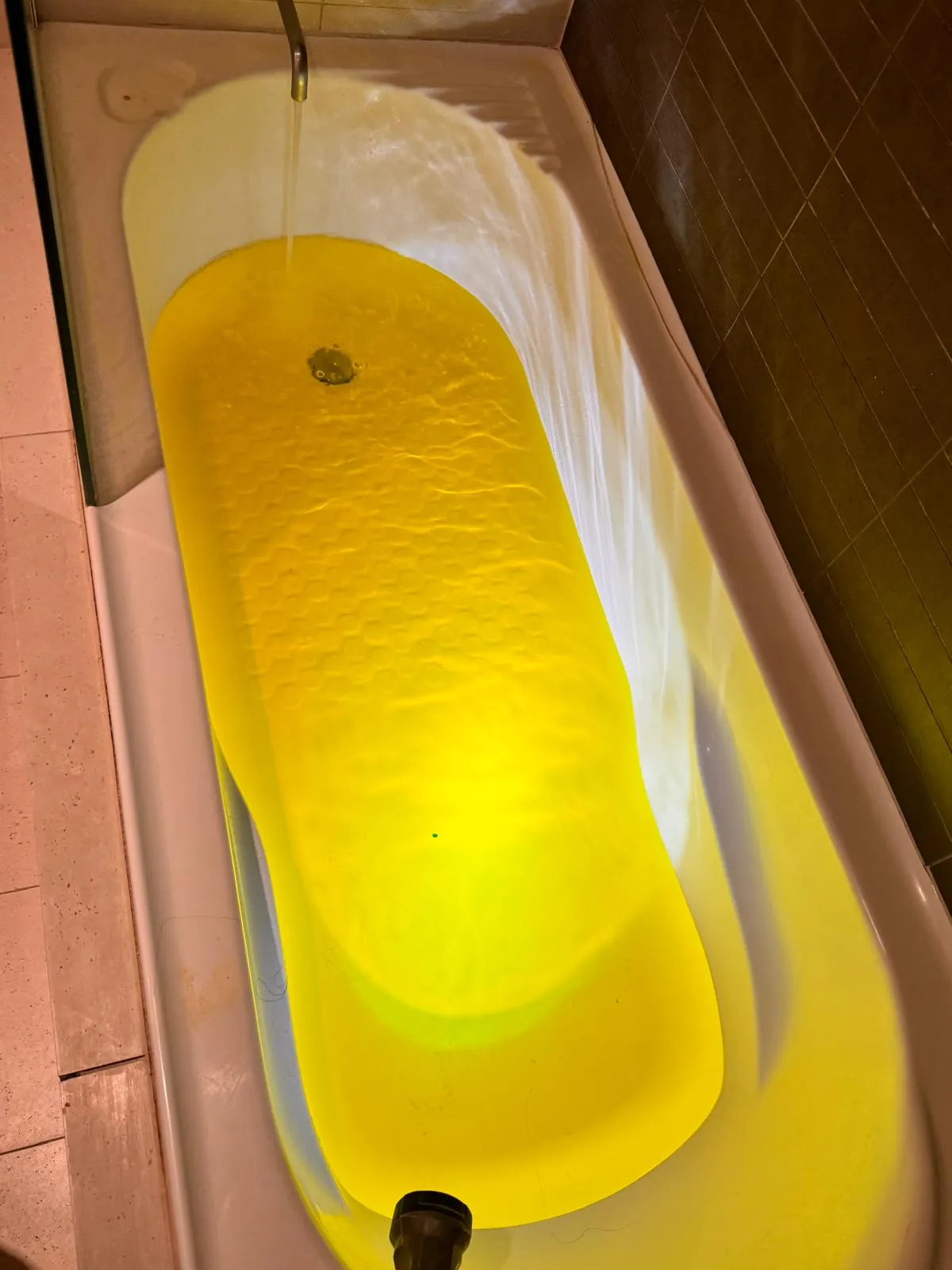
When the checks above do not settle it, a dye test does. The bath is filled with water carrying a fluorescent tracer dye, like the job in the photo at the top of this post. Then we watch where the colour turns up.
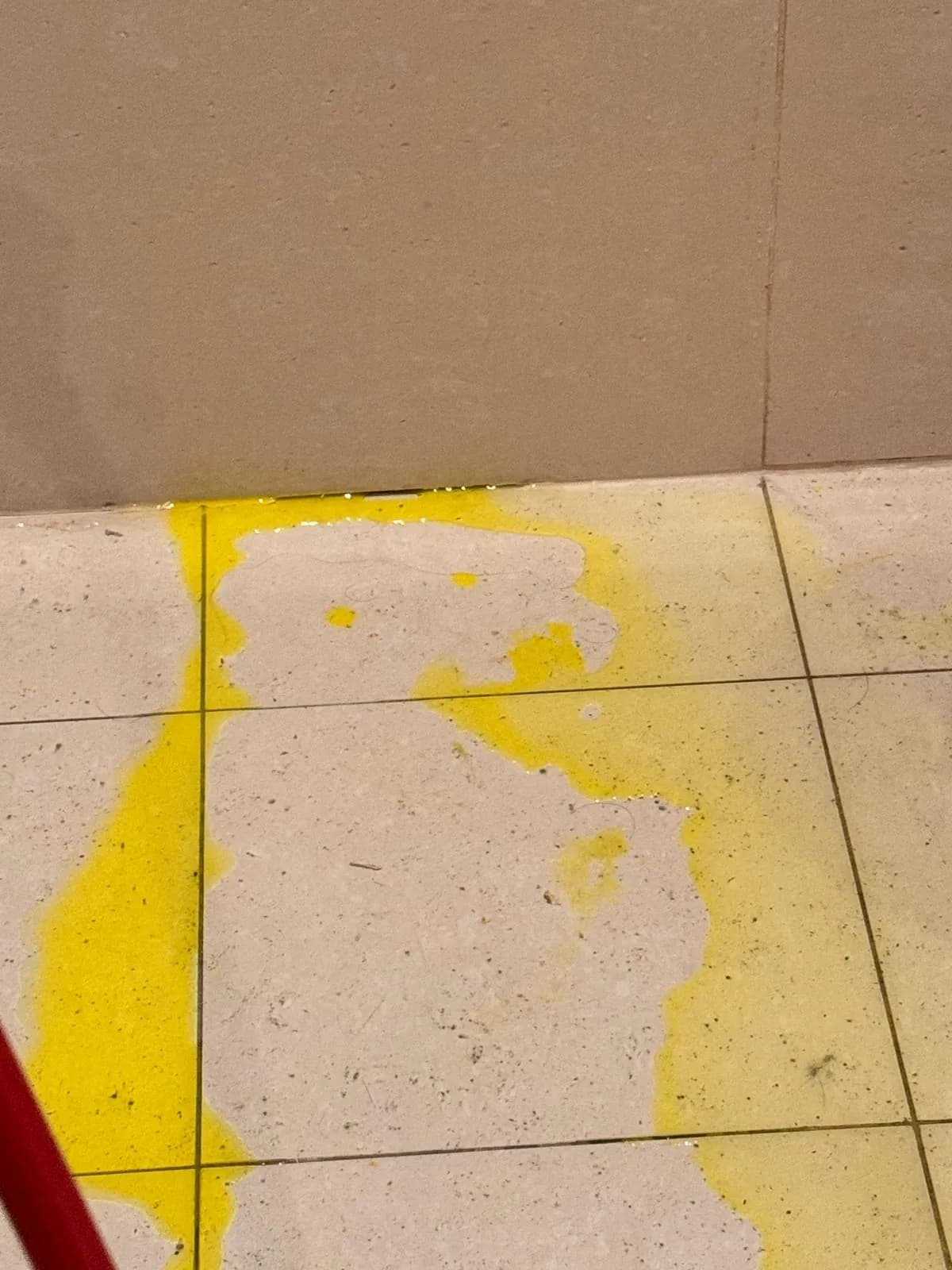
Because the dye is unmistakable, it shows the path the water takes without lifting the floor or pulling tiles off to guess. It is one of the tools our leak detection service uses, along with moisture and thermal readings.
What the fix involves
A failed edge seal means cutting out the old silicone, cleaning and drying the joint thoroughly, and resealing. It is often the cheapest fix, and worth doing early, before the water does damage behind the tiles.
A leaking waste or overflow means new washers or a new waste fitting. Many baths have an access panel. One that is tiled in may need the panel or a few tiles opened to reach it.
A leaking tap or pipe in the wall needs the wall opened at the right spot to repair it, which is exactly why finding the spot first matters.
If water has been getting under the bath for a long time, the floor or the waterproofing underneath may be damaged as well. At that point it is often worth looking at what else in the bathroom needs doing, and our bathroom renovation team can help plan it.
FAQs
How can I tell if my bath is leaking underneath?
Look around and below the bath rather than in it: swollen or stained skirting and floorboards next to it, loose or drummy tiles at the base, mould on the bath panel, a musty smell, or a stain on the ceiling of the room below. Silicone that has lifted away from the tiles along the bath edge is a common way in.
Can a bath leak through the plug hole?
Yes. The waste outlet in the bottom of the bath and the overflow outlet near the top both seal to the bath with washers. When those washers perish or the fittings work loose, water escapes under the bath every time it drains or is filled past the overflow.
Do you have to remove the bath to fix a leak?
Not always. Many leaks are fixed by resealing the edge or replacing the waste or overflow washers, which can often be reached from an access panel. A bath that is tiled in with no access may need a few tiles or the panel opened, and we will tell you before any work starts.
Think Your Bath Is Leaking?
Mr. Clog finds bath and bathroom leaks across Sydney without pulling the room apart, with no call-out fee and a fixed price before any work starts.