
Quick Answer
The usual signs of a leak under a concrete slab are a water meter that keeps moving with everything turned off, a water bill that climbs for no reason, a warm patch on the floor, the sound of running water, and flooring that lifts or smells musty. To check, turn everything off and watch the meter for 30 to 60 minutes.
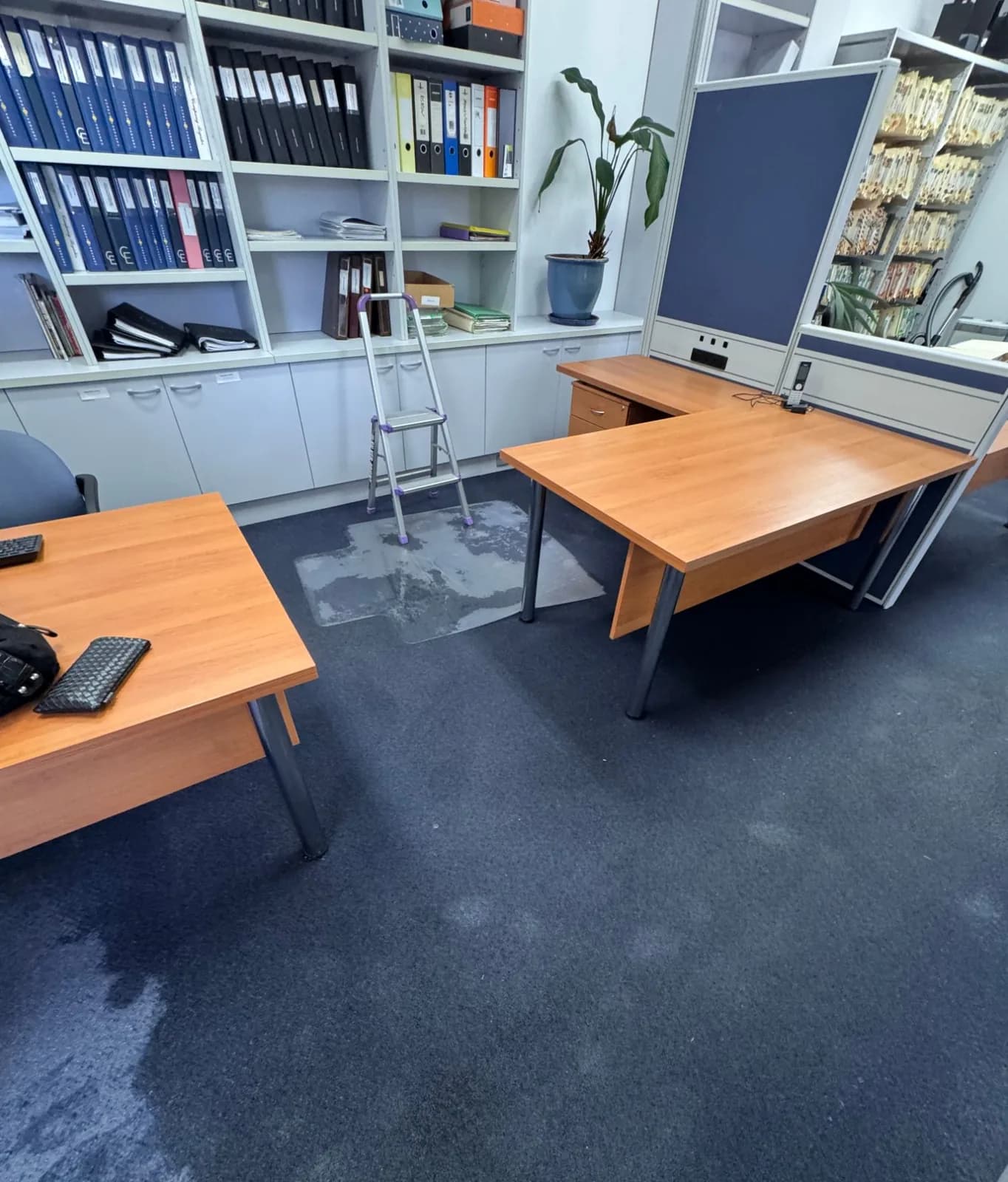
A slab leak is hard to spot because you can’t see the pipe. The water goes into the ground under the house, and the first sign is often a bill, not a puddle.
They are more common than most people think, especially in single-storey brick homes on a concrete slab, which make up a lot of the Hills District and Western Sydney. Here is what to look for, and how to tell a slab leak from the other things that make a floor damp.
What a slab leak is
In many slab homes, the hot and cold water pipes run in or under the concrete floor to reach the kitchen, bathroom and laundry. A slab leak is a leak in one of those pipes.
They usually start in one of three ways. Older copper pipe can corrode where it touches concrete or soil. A pipe can wear through where it rubs against something as it expands and contracts with hot water. And the ground itself moves: much of Western Sydney sits on reactive clay, which swells when wet and shrinks in dry spells, and that movement can stress a pipe or a joint.
Drain and sewer pipes run under slabs too. They can leak as well, but only when water is going down them, which matters for the test below.
The warning signs
The water bill jumps. A sudden rise with no change in how you use water is often the first clue. Our guide to reading your Sydney Water bill shows how to compare your usage with earlier bills.
A warm patch on the floor. If a section of tiles or concrete feels warm underfoot, and there is no floor heating, a hot water pipe below may be leaking. Pets often find these spots first.
The hot water system runs all the time. A leak on the hot side means the heater is constantly reheating water that is escaping. The gas or electricity bill can rise along with the water bill.
The sound of running water when every tap is off, sometimes heard best at night with the house quiet.
Flooring that changes. Timber or laminate that cups or lifts, carpet that feels damp, tiles that crack or sound hollow, or skirting boards that swell, in a spot with no bathroom or kitchen above.
A musty smell or mould low on walls or in cupboards at floor level.
Lower water pressure than you used to have, or damp ground outside along the edge of the slab.
The meter test
This is the single most useful check, and it costs nothing.
1. Turn everything off. Every tap, the toilet cisterns finished filling, the washing machine, dishwasher, irrigation and any pool top-up.
2. Read the meter at the front boundary, or take a photo of the dials.
3. Wait 30 to 60 minutes without using any water, then read it again.
If the numbers have moved, or the small dial is turning, water is escaping somewhere after the meter. That does not prove it is under the slab. A running toilet or a dripping outdoor tap will move the meter too, so check those first. Our guide to detecting a hidden water leak covers the other usual hiding places.
One more step, if you can reach it: turn off the cold water inlet valve on the hot water system and watch the meter again. If it stops, the leak is most likely on the hot water side.
When it’s something else
A damp floor is not always a slab leak. If the meter test shows no movement, the water is not coming from the pressure pipes, and the usual suspects are:
A shower or bath. Water getting through failed grout, silicone or waterproofing and spreading under nearby floors. It gets worse after the shower is used, not all the time. Our guide to a shower leaking into the wall covers the tests.
A drain under the slab. A cracked waste pipe leaks only when water goes down it, so the meter stays still.
Water from outside. Garden beds or paving built up against the walls, blocked stormwater, or poor drainage around the house can push moisture in at floor level, often after rain.
How we find it
The aim is to find the leak to within a small area before anything is cut, so only that spot is opened up.
Pressure testing isolates the hot and cold lines in sections to confirm which one is losing water. Acoustic listening picks up the sound of water escaping under pressure through the concrete. Thermal imaging shows the warm trail a hot water leak leaves in the floor. Our leak detection service uses all three.
How it’s fixed
There are two usual options, and the right one depends on the pipe and the house.
Spot repair. The floor covering and concrete are opened over the leak, the damaged section of pipe is repaired, and the slab is patched. This suits a single leak in otherwise sound pipe.
Re-routing. The pipe under the slab is left in place and capped, and a new line is run another way: through the walls, the ceiling or the roof space. This often suits older pipe where one leak is likely to be followed by another, and it avoids breaking up a finished floor.
Either way, we explain the options and give a fixed price before any work starts.
FAQs
How do I know if I have a leak under my slab?
Turn off every tap and water-using appliance and watch the water meter for 30 to 60 minutes. If it moves, water is escaping somewhere on your side. A warm patch on the floor, the sound of running water when nothing is on, or flooring lifting with no leak above it all point to a pipe in or under the slab.
Is a slab leak an emergency?
Usually not in the first hour, but it should not wait weeks. Water under a slab can wash out the ground beneath it and keeps adding to the water bill. A hot water leak also runs the hot water system around the clock. If water is coming up through the floor, turn off the main stop tap at the meter and call a plumber.
Does home insurance cover a slab leak?
It depends on the policy. Many cover sudden water damage but not the pipe itself or damage from a slow leak. Some include cover for finding the leak. Check your policy wording or ask your insurer before work starts, and keep photos and the plumber’s report.
Think a Pipe Is Leaking Under the Floor?
Mr. Clog finds slab leaks across Sydney without digging up more than we need, with no call-out fee and a fixed price before any work starts.